Keep It Simple – Kansas museum’s exhibit features works from Midcentury Modern designer Paul McCobb

Keep It Simple – Kansas museum’s exhibit features works from Midcentury Modern designer Paul McCobb

November 2021

Cover Story

Keep It Simple - Kansas museum's exhibit features works
from Midcentury Modern designer Paul McCobb

by Corbin Crable


Midcentury Modern Design

The Johnson County (KS) Museum has brought back the simplicity and style of midcentury modern design with its exhibit on industrial designer Paul McCobb.
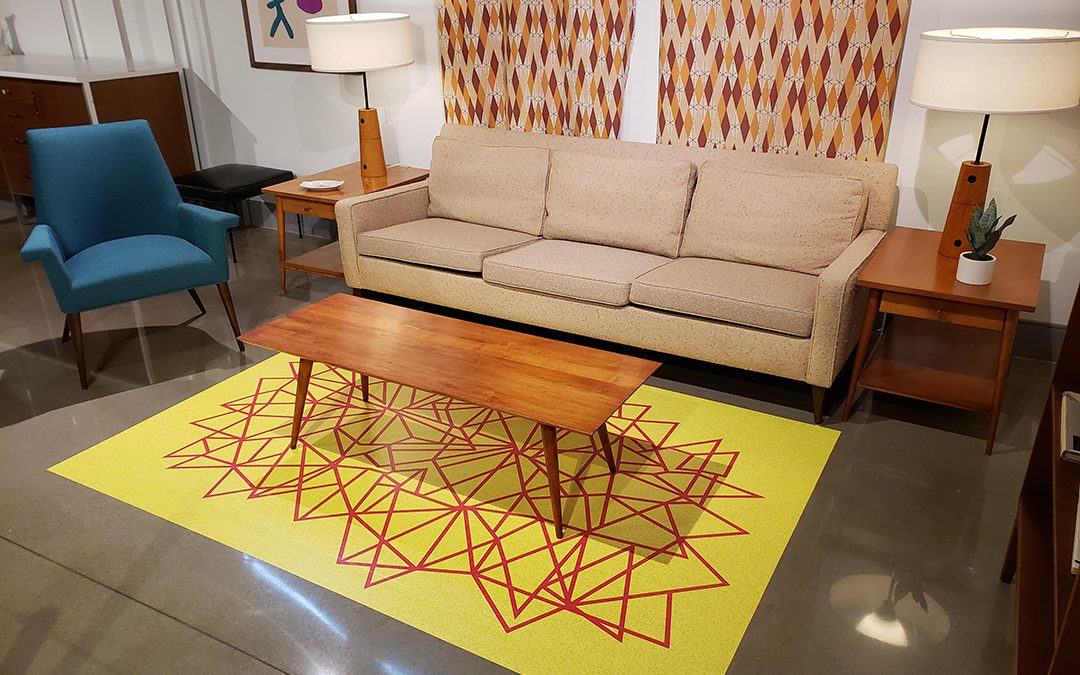
The museum’s exhibit, Paul McCobb: American Designer, which opened in May and runs through Jan. 8, 2022, features several pieces from the personal collection of Kansas City area resident Samuel Hildreth, showcasing McCobb’s versatility as a midcentury modern designer and his legacy as a man who filled postwar houses with items that pieced together the American Dream.
Characterized by clean, simple lines, the Midcentury Modern design movement, which lasted from the end of World War II until the late 1960s, eschewed any embellishments in decoration. Perhaps best known for his forward-thinking furniture designs, McCobb, one of the most easily recognizable designers of the midcentury modern period, was the creator of so much more, one museum administrator says.
“Paul McCobb was much more than a furniture designer. In fact, he preferred to be called an industrial designer, and those are people who design for lifestyles – not just furniture,” says Andrew Gustafson, curator of interpretation for the Johnson County Museum. “He did textiles, tiles, lamps, warming trays, china, drinking cups, radios, TV sets, air conditioning units, structures for world fairs, a really impressive array of things. Like other industrial designers, he was trying to change the way people lived, to simplify their lives, to make things very versatile and very easy.”
 

All-Electric House

All-Electric House

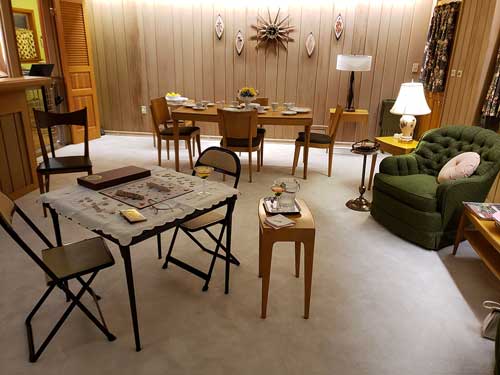
Several Paul McCobb furniture pieces have been incorporated Into this 1954 All-Electric House, on permanent display at the Johnson County Museum.
Paul McCobb - All-Electric House

Paul McCobb - All-Electric House

The All-Electric House on display at the Johnson County Museum, in which several Paul McCobb
pieces can be seen, will soon be redecorated for the Christmas holiday.

Designing the basics of midcentury life

Paul McCobb was born in Massachusetts in 1917 and embraced art at an early age. After serving a short stint in the U.S. Army at the height of World War II, McCobb moved to New York City, where he found work as a decorating consultant for a furniture store. In the 1950s, he would join the Planner and Directional furniture lines as a business partner In addition to his furniture designs, McCobb also joined forces with such household names as CBS-Columbia, designing radios and television sets, and Bell & Howell, for whom he designed hi-fi consoles.
McCobb died in 1969 at the age of 51; his designs can still be easily found on auction websites and antiques websites.
Gustafson says that for the current exhibit, Hildreth approached museum administrators and pitched the idea. It was, Gustafson recalls, an easy sell.
“(Hildreth) said, ‘I have this amazing collection. It might be worth checking out to include in one of your exhibits,’ and so we did,” Gustafson says. “We checked out this huge array of pieces. We said, ‘Sam, you’ve got everything but the kitchen sink!’”
As the pieces that would make up the exhibit were carefully transported to the museum, Gustafson says he and his colleagues agreed that the installment would be a success. After all, most people have seen McCobb’s work before, even though they might not have even known it at the time.
“Besides the collection being local, Paul McCobb was designing for the entire United States. His pieces were in department stores, they were available in high-end show rooms,” Gustafson says. “He had something that would fit your needs. His furniture is very recognizable. People would recognize these pieces from their parents’ or grandparents’ homes. All of those things together made him a great choice for us.”
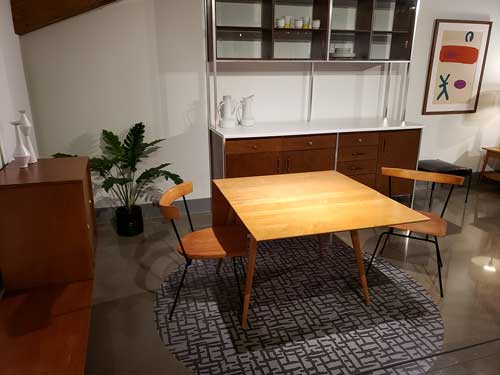
 

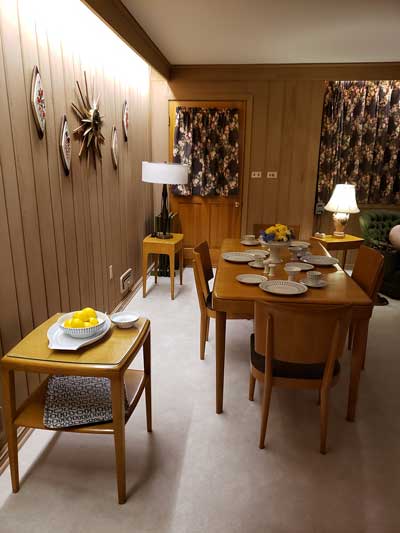
Dining Room

Dining Room

This dining room set exemplifies McCobb’s simple, minimalist style.

McCobb makes a comeback

Gustafson says that due to the size of the exhibition space, staff had to be especially strategic about choosing which McCobb pieces to showcase from Hildreth’s diverse collection.
“Our exhibit space has some limitations. We’re only 1,450 square feet, so it’s not a huge space,” he says. “We had to keep in mind that we have a lot of children and families who come through here, so how can we display things safely? That’s why we chose to do sets behind wires. We alos wanted to display the variety of things McCobb made.”
More and more merchants and vendors have begun reproducing McCobb pieces as the trend toward minimalism in design has gained favor with the public in recent years, Gustafson adds. McCobb’s furniture is a perfect example of items that fit into such a minimalist home, both then and now.
“They’re sleek, they’re clean,” Gustafson says of McCobb’s furniture designs. “Johnson County has lots of postwar houses -- in all of those homes, these pieces would be appropriate. People don’t want a lot of clutter. If you want to declutter, this is the style to have. (McCobb) used natural woods, natural fabrics, and he used the postwar color palette. He loved the color lemon yellow, so that features in our big sign (at the exhibit’s entrance). All of those things are popular; people tend to be comfortable around those things.”


‘Midcentury Modern design is popular again’

Those feelings of comfort and familiarity reveal themselves in a feedback wall, on which visitors to the exhibit may scrawl their review on a Post-It note and affix it to the wall as they leave the exhibition space.
“People are really responding,” Gustafson says, gesturing at the feedback wall, dotted with small, pink pieces of paper. “Midcentury Modern design is popular again.”
The presentation of McCobb’s works doesn’t end at the exhibit itself. Some McCobb pieces have also been incorporated into the museum’s permanent installments, most notably its 1950s All-Electric House. The house, built in 1954 by Kansas City Power and Light Co., was hailed as the pinnacle of “modern American family living” and the type of home families would pursue as they moved into America’s suburbs. The house was physically moved from two of its previous locations around the county, Gustafson says, before being modified and settled into the museum’s permanent collection. By the time it was donated to the museum in 1994, five families had lived in it.
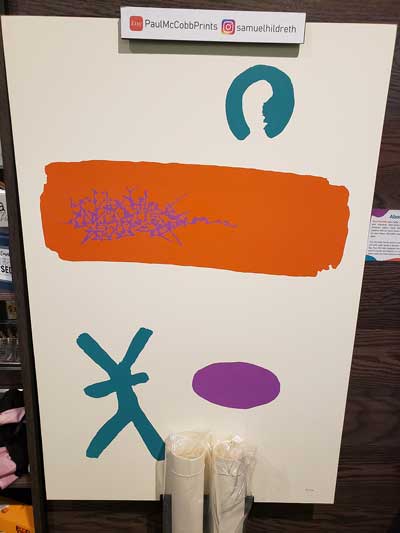
 

abstract painting

Abstract Painting

Paul McCobb created this abstract painting for his family’s 1960 Christmas card. The image appears in the McCobb exhibit and on posters for sale in the Johnson County Museum’s new gift shop.
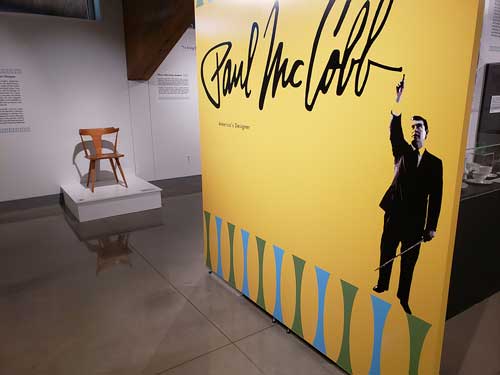
Paul McCobb: American Designer

Paul McCobb: American Designer

The sign at the entrance to the exhibit Paul McCobb: American Designer, now on
display at the Johnson County Museum in Overland Park, KS, prominently features
the color lemon yellow, a favorite of McCobb himself.

The very first smart home

According to Johnson County’s Parks and Recreation Department, the house and others like it were marketed as “the lazy man’s paradise” – electrical outlets could be found along baseboards every three feet in any given room in the house, electrical switches opened and closed the living room curtains, and built-in speakers meant the family was able to watch TV from their own patio, and a special switch above the living room fireplace opens a painting to reveal a black-and-white television set.
In recent months, Gustafson says, some McCobb pieces have been incorporated into the living room’s setup, including chairs, tables and lamps. The museum’s staff makes seasonal changes to the house’s decorations, too – for the Christmas season, for instance, a silver aluminum Christmas tree will be put up in the living room. Students and faculty members from nearby Johnson County Community College’s Department of Fashion Merchandising will get in on the holiday fun, too, bringing in some wardrobes to create a scene of a holiday cocktail party. On Dec. 2, the fashion merchandising students and faculty members will be on site to discuss the pieces on display, Gustafson adds.
Visitors to the museum can take a bit of McCobb home with them, Gustafson says. In the museum’s brand-new gift shop, a variety of items related to the exhibit are being sold, with the most notable being a poster bearing the design of a Christmas card designed by McCobb himself, an abstract piece in violet, orange and teal.
Gustafson says there is still plenty of time in which to visit the museum for the holiday season and to discover (or rediscover) the designs of Paul McCobb.
“Our museum is one of the first to do an exhibit just on McCobb,” Gustafson says. “There are some real gems here.”
For more information, call 913-826-2787 or visit www.jcprd.com/434/Special-Exhibitions.

You spin me ‘round | Record revival introduces new generation to the sound of vinyl

You spin me ‘round | Record revival introduces new generation to the sound of vinyl

October 2021

Cover Story

You spin me ‘round : Record revival introduces new generation to the sound of vinyl

by Corbin Crable


Vinyl Record's Time to Shine

If media formats are cyclical, the early 21st century is the vinyl record’s time to shine once again.

Since the early 2000s, records have once again found favor to the music-listening public; for Baby Boomers and early Gen X-ers, its appeal never diminished, with many individuals proudly displaying their coveted record collection over the years. In 2020, according to the Recording Industry Association of America, records outsold CDs for the first time since 1986.

The record is likely a lot older than you may think, and their beginnings can be traced back to that great American inventor you learned about in elementary school, Thomas Edison. He invented the phonograph in 1877; that device had the capability of both recording and playing sound. A stylus (or needle) would rotate around a metal cylinder with grooves carved into it.

The cylinder contained the recorded noise. These cylinders were made of tin foil and, in the later years of the 19th century, they were made of wax.

Birth of the disc

Record discs didn’t come along until 1889, when an American inventor named Emile Berliner patented the gramophone, a close cousin to the record player we know today. Discs were produced to be played on the gramophone with the same general features as the previous generation’s wax cylinders. This time, the grooves could be found on the surface of the disc, and a hand-crank rotated the disc as a needle played the sound they contained. Early records were made of a thick shellac that was brittle and heavy; toward the dawn of the 20th century, vinyl was used, as it proved to be more durable.

According to magnoliarecord.com, disc sizes were determined by how many revolutions per minute (RPMs) the disc would spin at on the record player to create the desired speed. The first records were pressed at 78 RPMs, then 33 ½ RPM, and finally, at 45, the current format of singles pressed in vinyl.

Kansas Record Show in Lenexa

Kansas Record Show in Lenexa

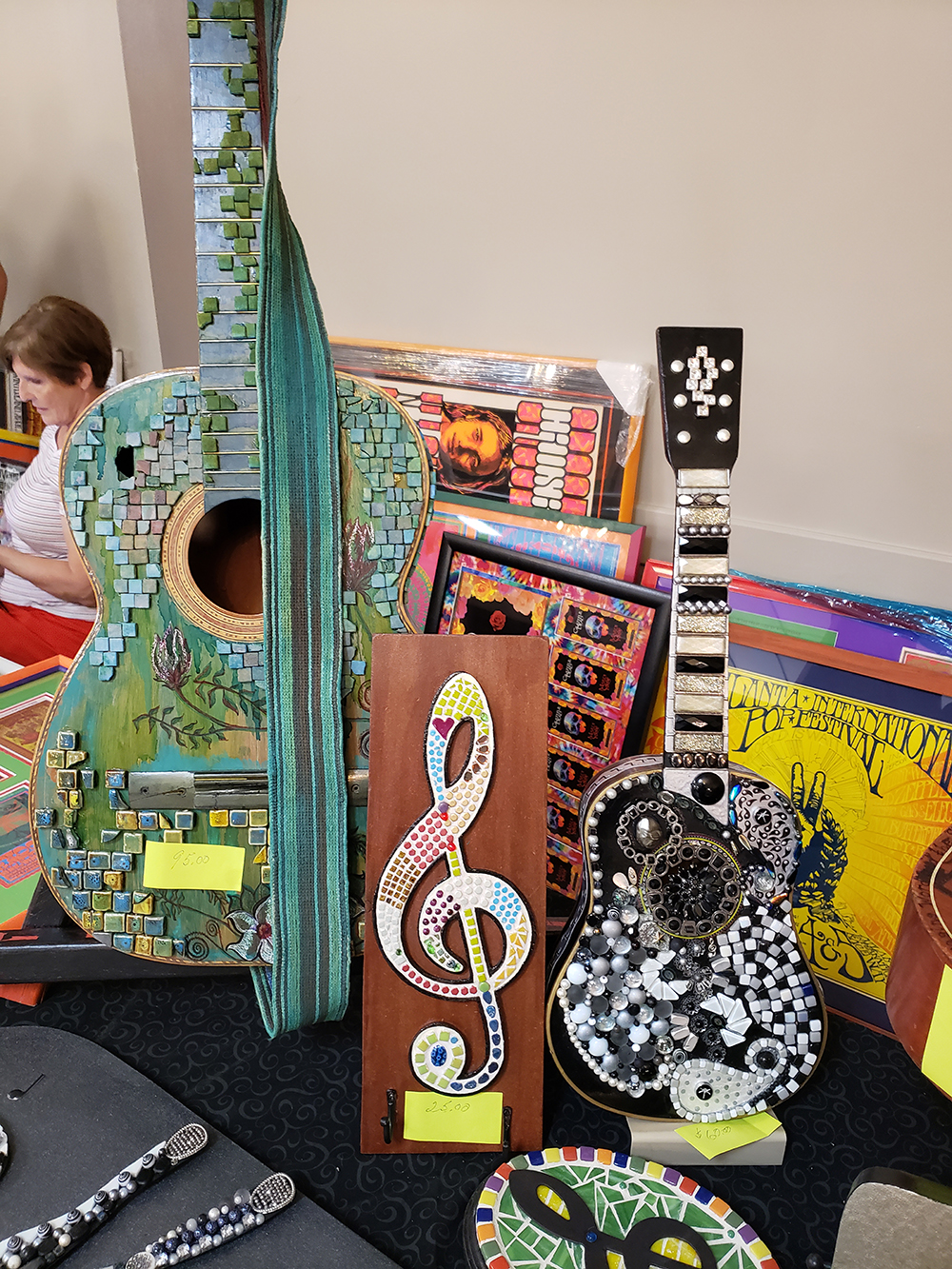
A vendor displays his handmade art at the annual Kansas Record Show in Lenexa. Photo by Corbin Crable

Kool Kat Music Exchange

Kool Kat Music Exchange

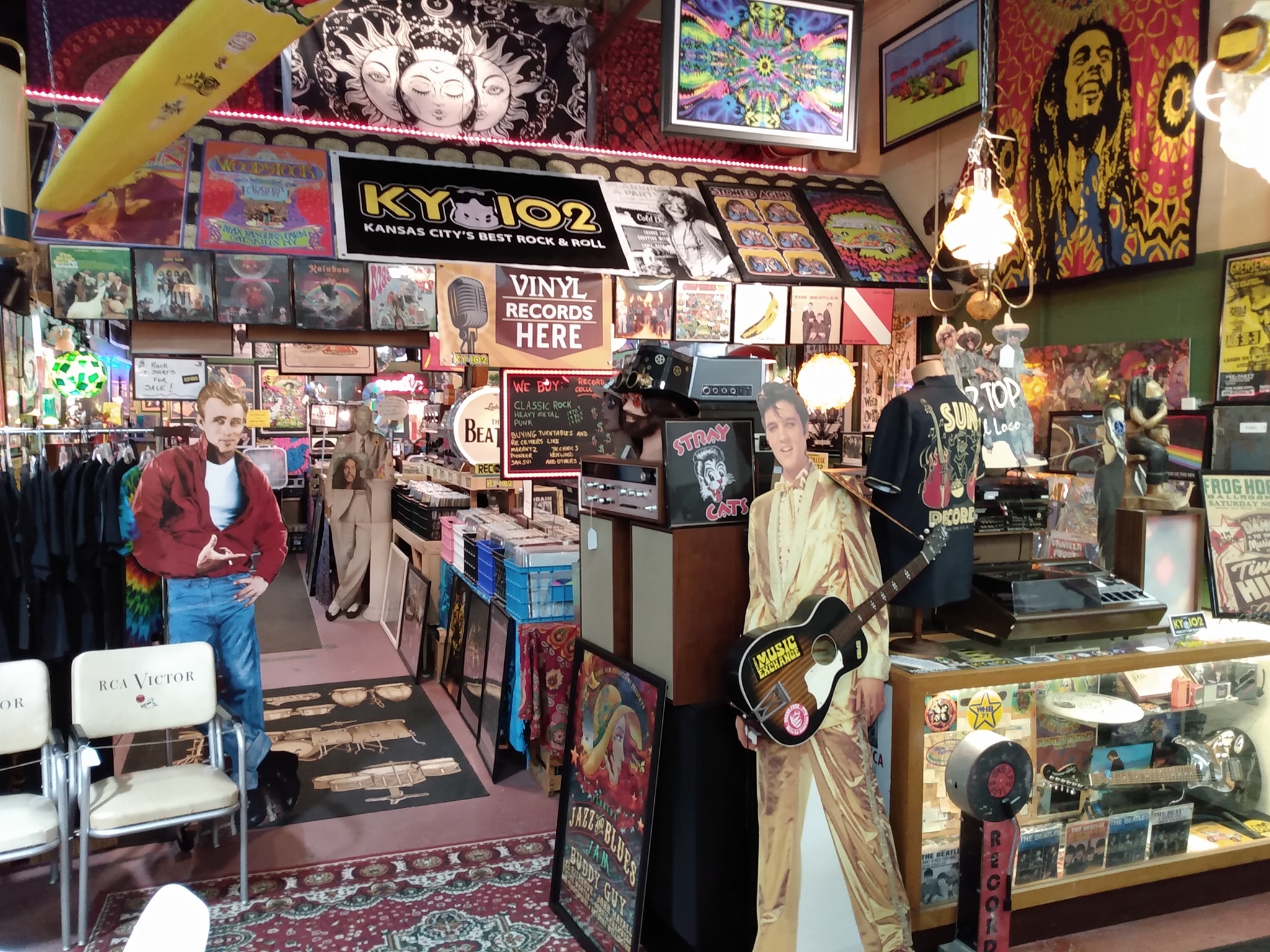
Kool Kat Music Exchange, a music store  inside St Joseph auction Antique Market in St. Joseph, MO., has an amazing collection of records, band and concert posters, and other music related items (photo courtsey of Facebook)

Enjoyed by young and old alike

Locally, merchants who sell records say that, unlike other music formats, they’ve seen vinyl’s appeal transcend generations.

“I’ll see great-grandparents come in with their children, who will come in with their children,” says Jeff Todd, owner of Vinyl Heaven, based in Overland Park, KS.

Todd says that more and more contemporary musical artists are releasing albums digitally and on vinyl, too, making the medium more appealing to younger generations. Syl uch youths also are digging into their parents’ cherished vinyl collections and discovering artists ranging from The Beatles to Pink Floyd to The Who.

“When you see the teens come in here, they’re listening to new music and their parents’ music,” Todd says. “You also see more couples come in together.”

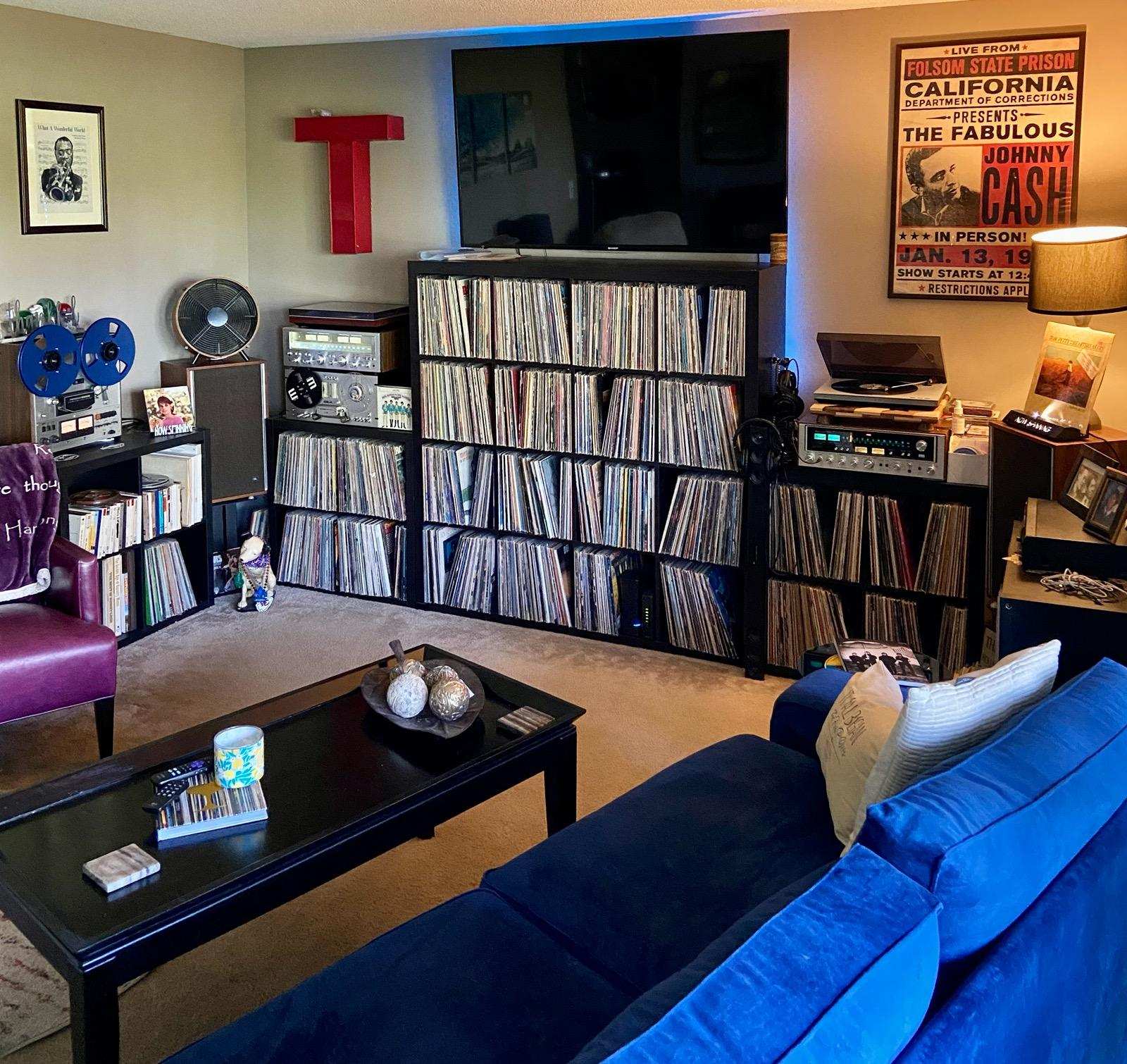
Overland Park resident and vinyl collector Tom Gryska says that he and his wife are one of those couples; throughout the COVID pandemic, they began collecting movie soundtracks onj vinyl, then watching the film itself as a followup. Gryska’s collection numbers more than 2,500 vinyl albums, as well as seven turntables.

“The first album I purchased was Elton John’s ‘Goodbye, Yellow Brick Road,’” Gryska recalls of the first album he ever bought himself (he was 7 years old). “I‘d saved nickels and dimes.”

Gryska says “Yellow Brick Road” holds a special place in his heart because it reminds him of his father, who died last year.

“My dad was a music lover – he was into classical music and didn’t like rock, but he loved that Elton John album,” Gryska says.

Vinyl Heaven

Vinyl Heaven

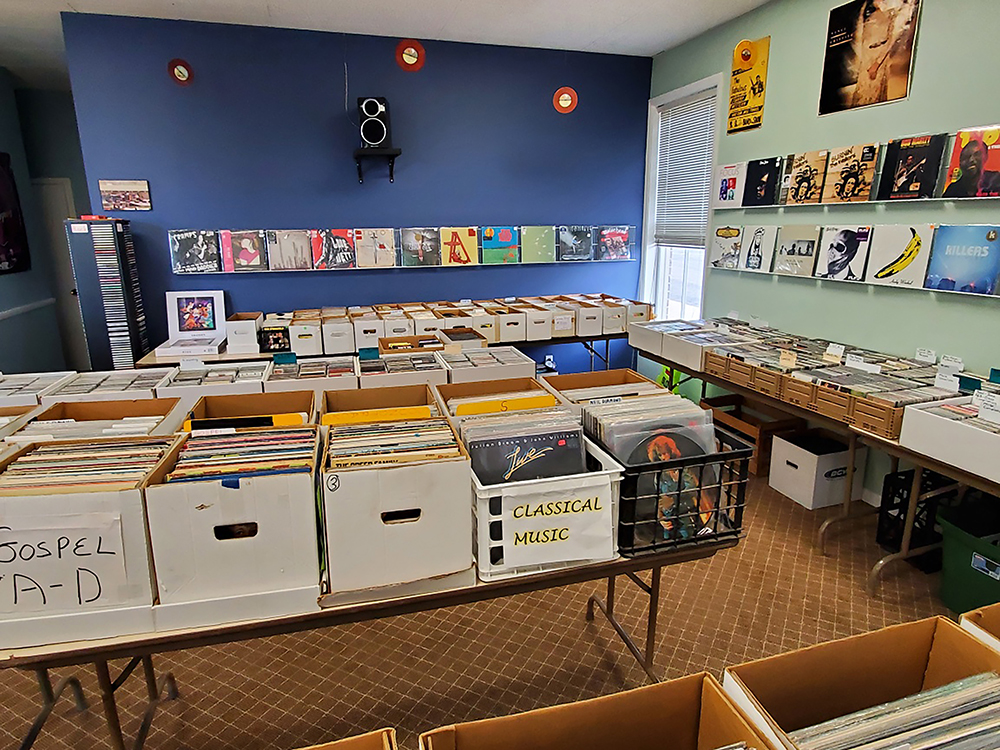
Vinyl Heaven in Overland Park, KS, has been open since 2018. Photo courtesy of Jeff Todd

A place for vinyl lovers

Jeff Todd’s Vinyl Heaven has been in business since 2018, the same year that Todd founded the annual Kansas Record Show. The event takes place every fall at the VFW in Lenexa.

“My major motivation in opening my store was that I wanted to give people choice,” Todd says. “There are only two record stores in Overland Park.”

The record show, which started around the same time, began with a modest 70 attendees. Now, several hundred vinyl enthusiasts convene on the VFW every year to browse used and new vinyls, vintage record players, posters and other ephemera related to records. Todd says that the power of social media has helped boost the show’s attendance numbers tremendously.

“A lot of it was social media with some Facebook and radio advertising,” he says.

Todd says the couples he sees come in to both his store and the annual record show display a great passion for the format, and that they bond over that experience.

“I think it relates to couples doing things together they enjoy and they have in common,” he says. “You have people who listen to vinyl before they met.”

Stay home and tune in

That passion has only grown throughout the last year and a half, Todd observes, due to mandated quarantines that have been put into place with the spread of COVID-19.

It could all come back to staying home and listening ot vinyl together. “Our business increased 100 percent last year due to COVID,” Todd shares. “It could all come back to staying at home and listening to vinyl together.”

Todd says he thinks fans of vinyl records are loyal to the format for a multitude of reasons.

“There’s a group of vinyl users who have never really did stop listening to music on records,” he notes. “There are a number of CDs being released for younger groups, and they’re even being released as albums instead of CDs. They’re doing a lot of color albums now to attract younger folks.”

Those purists who prefer to listen to their music in a physical format can best be compared to book lovers who wish to hold a book in their hands instead of a Kindle or other electronic reading device.

“They want to touch it, feel it, hold it, have it in their hands. The artwork on the albums cannot be reproduced in the CD format,” Todd says. “The other part of the equation is that you’re seeing record players being given as gifts. Some (recipients) will keep them forever, or they’ll buy a stereo.”

Gryska counts himself among those vinyl fans who adore the feel of a record in his hands.

“The reason for vinyl’s staying power is because you have that physical item you can hold and look at,” Gryska says. “And people come over and they want to see how my turntable works.”

turntables

Turntables

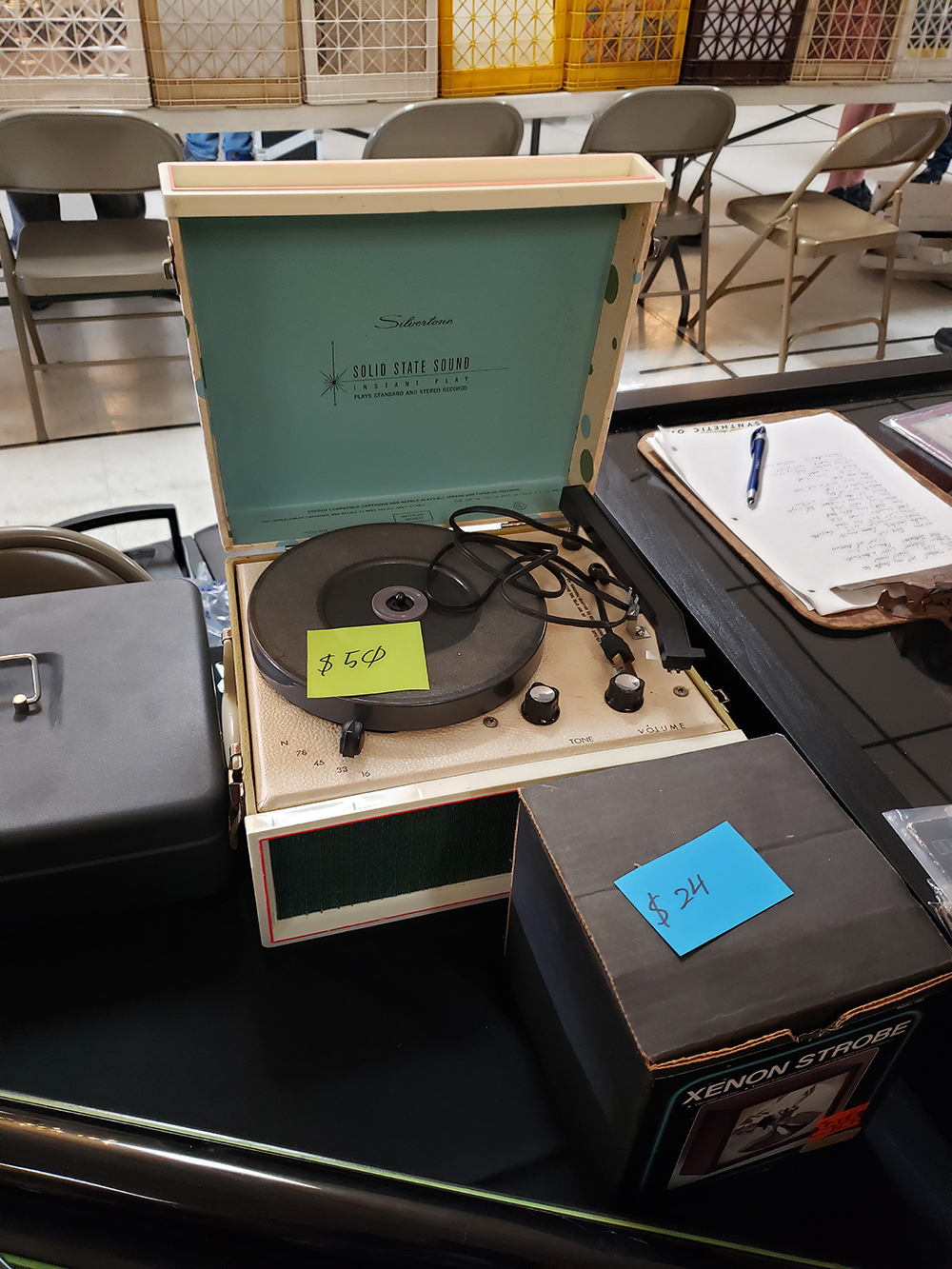
In addition to records, other items such as vintage turntables were up for sale at the Kansas Record Show this year. Photo by Corbin Crable

Beatles and other albums

Offerings Like Beatles' albums

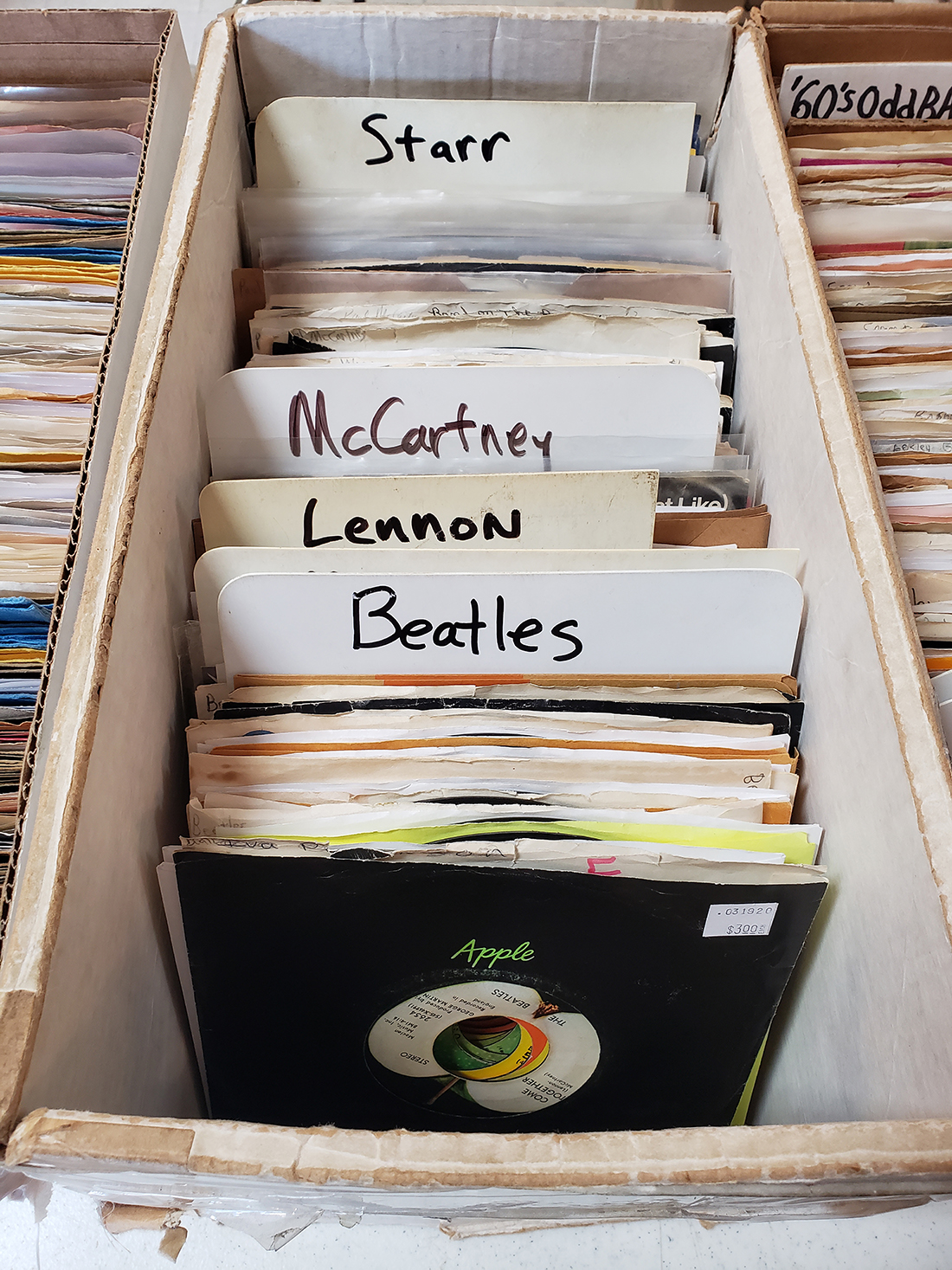
Offerings at the Kansas Record Show include more commonly released Beatle albums, as well as a few rare surprises. Photo by Corbin Crable

“A richer, warmer sound”

Many fans of vinyl will even go so far as to say that they enjoy the sound that vinyl records provide over digital music or compact disc.

“It’s a richer, warmer sound,” he says, “and CDs are too sterile.”

Gryska says he agrees with Todd’s opinion about sound quality.

“There’s a warmness to vinyl,” he observes. “CDs may not have that feeling. I love the sound of that needle hitting the vinyl.”

As for his own personal collection, Todd says he is most proud to own the Beatles’ 1968 White Album on vinyl. Copy 0000001 of The White Album, owned by Ringo Starr, sold at auction in December for $790,000.

On the other side of the Kansas/Missouri state line is the Kool Kat Music Exchange in St. Joseph, MO. Specializing in all kinds of vinyls from classic rock to classic country, Kool Kat is a vinyl collector’s paradise, offering an eclectic mix of music to satisfy just about any taste. In addition to the Kool Kat’s massive vinyl inventory, music equipment, band promos, band t-shirts, and posters line the walls of the store, beckoning to both its loyal customers and to novice collectors.

It’s your day

The popularity of vinyl has even lent itself to its own holiday – Record Store Day, celebrated every April since 2008. The day is just as much a celebration of the spirit and importance of small businesses as it is of record stores in particular.

“This is a day for the people who make up the world of the record store—the staff, the customers, and the artists—to come together and celebrate the unique culture of a record store and the special role these independently owned stores play in their communities,” according to www.recordstoreday.com. “Special vinyl and CD releases and various promotional products are made exclusively for the day. Festivities include performances, cook-outs, body painting, meet & greets with artists, parades, DJs spinning records, and on and on. In 2008 a small list of titles was released on Record Store Day and that list has grown to include artists and labels both large and small, in every genre and price point. For several years, 60% or more of the Record Store Day Official Release List came from independent labels and distributors. The list continues to include a wide range of artists, covering the diverse taste of record stores and their customers.”

Todd says the holiday brings vinyl lovers together with sales, promotions and specials at participating stores across the country and around the world.

“Indie owners have the support of Record Store Day when we have exclusive limited releases out by artists,” he explains. “It’s an internationally celebrated holiday. You can’t get those releases at Walmart. It’s a real trip. People line up for that stuff.”

The power of nostalgia

At Vinyl Heaven, in addition to the records that keep flying off the shelves, Todd’s store is adding more cassettes and even 8-Tracks to its inventory, as both formats are growing in popularity once again. Still, he predicts, vinyl is here to stay for quite a while.

“I think it will continue to stay strong,” he says.

To Todd, the overall popularity of vinyl is fueled by nostalgia. Music captures a special place, a feeling, a time in the memories of its listeners that lives on with them forever.

“Nostalgia plays a big role in all of this,” he says.

For Gryska, vinyls provide an everyday escapism that helps him unwind after a long day.

“I love to come home, pick out jazz or RB, and it’s very calming,” he says. “It’s my way of relaxing when I come home. It’s my getaway from the world.”

Relax an listen to music

Relax and Listen

The main record collection of long time record collector, Tom Gryska of Overland Park, KS. (photo by Tom Gryska)