
Knuckle Down Marbles remain the small wonder of the toy world
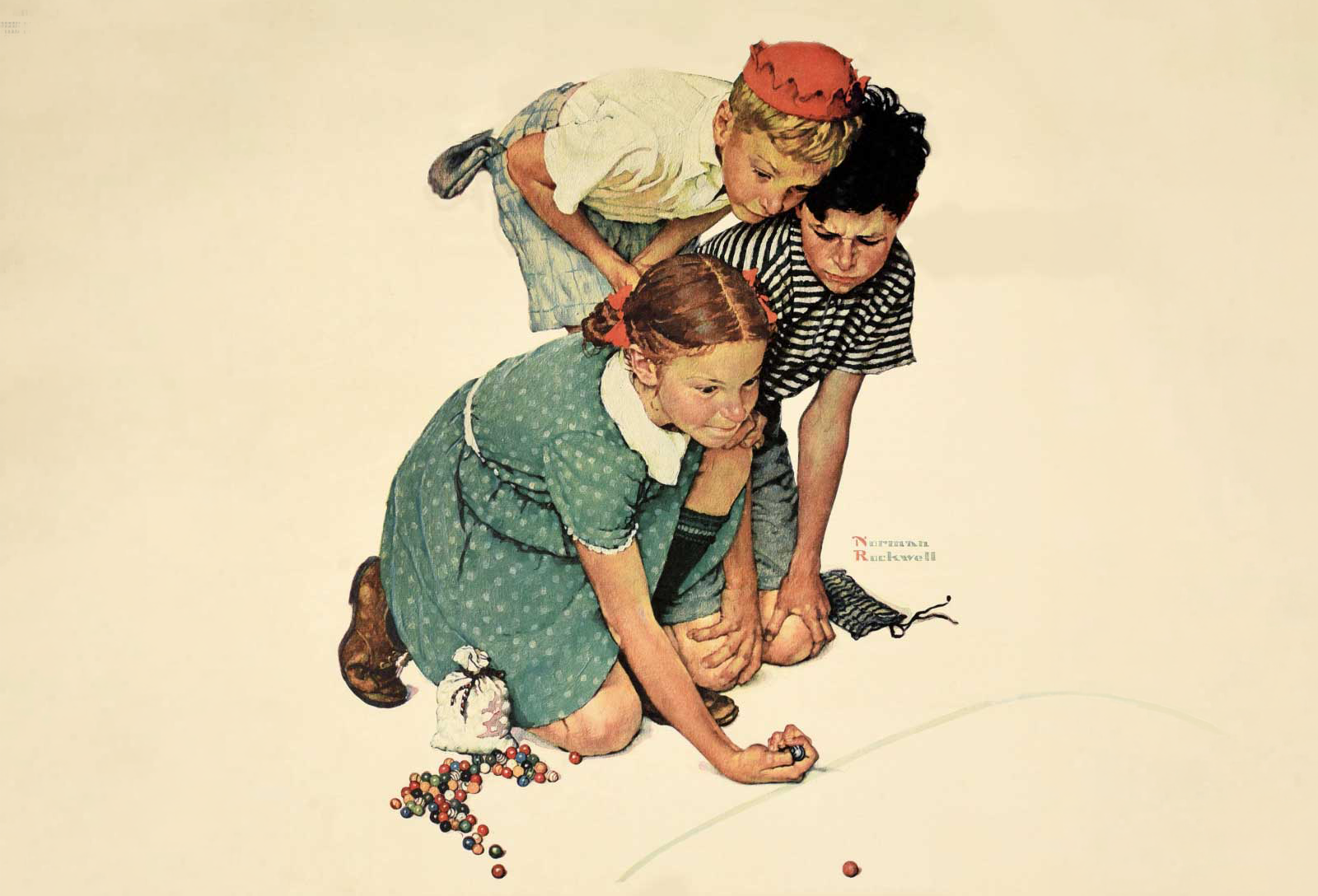
Artist Norman Rockwell’s illustration “Marble Champ” beautifully depicts the intense competition of marble play. (Image courtesy of Etsy)
May 2026
Cover Story
Knuckle Down
Marbles remain the small wonder of the toy world
by Corbin Crable
There’s plenty of debate surrounding exactly where the marble originated, but one thing is certain – whether you’re 8 or 80, these tiny toys still seem to amaze us.
Game of the pharaohs
Though games of marbles have been played for at least 3,000 years (Egypt’s boy pharaoh King Tutankhamen was even buried with his), we at least know that the name “marble” came from Nurem-berg, Germany, in the early 16th century. In those days, marbles were made primarily of stone like agate or limestone (and, wonder of wonders, even marble itself). Ceramic marbles began to be mass produced in the late 19th century.
Around that time, glass, too, was being handcrafted into marbles, and we can also credit the Germans with the invention of marble scissors (“The orb began at the end of a rod of semi-molten glass, and after a blob was formed, those special scissors sliced it off,” according to The Art of Toys website). The first glass marbles made by machine rolled off the line in 1903.
Antique clay marbles
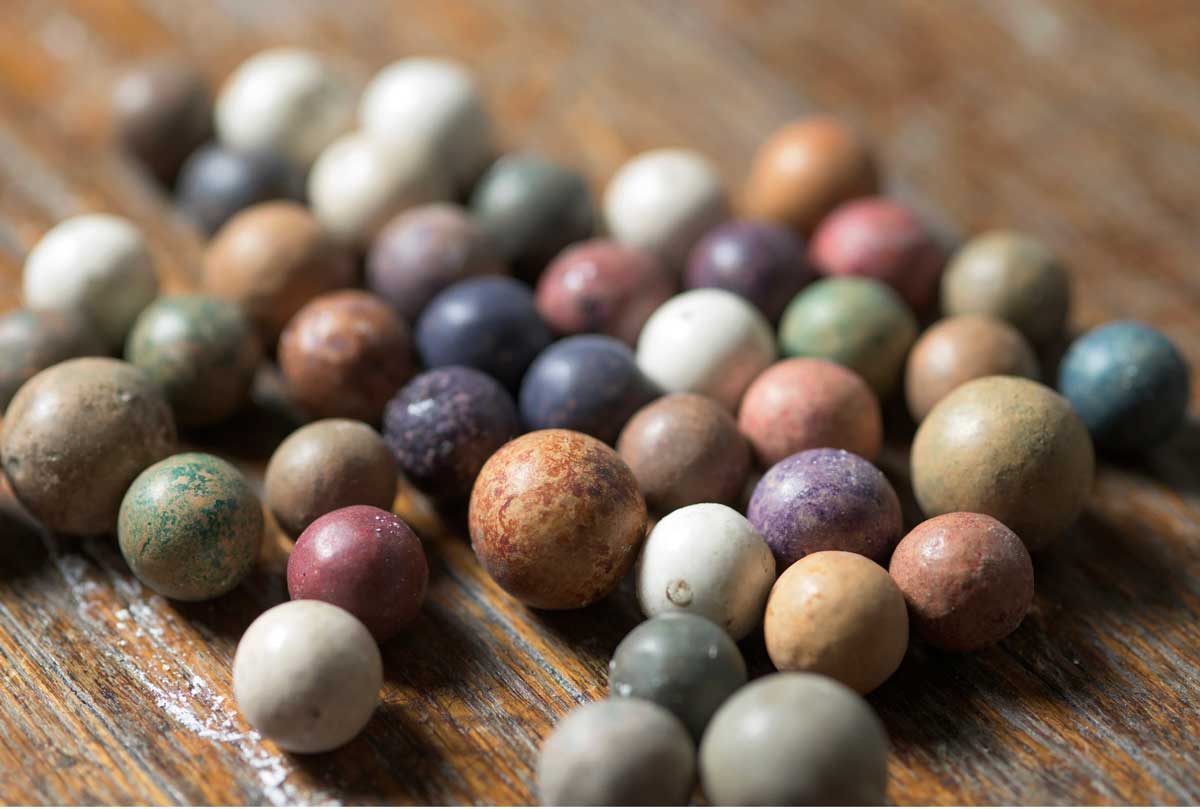
A set of antique clay marbles. (Image courtesy of Samson Historical)
“Glass marbles quickly dominated the market, particularly after industrial mach-ines made them more efficiently, lowering the price,” according to the Strong National Museum of Play in Rochester, NY. “Valued as much for their beauty as the games played with them, marbles inspired one 19th-century enthusiast to describe the ‘twisted spiral of colored filament’ in glass marbles as ‘thin music translated into colored glass.’”
Marbles made by machine
Handmade marbles began to be produced in smaller quantities as machine-made marbles began to dominate the market.
“American companies like Akro, Agate, Peltier Glass and Master Made Marbles began to really churn them out. They were made out of all sorts of materials: baked clay, glass, steel, plastic, onyx, and agate,” according to The Art of Toys. “The machines also meant better shooting marbles, because there were no nicks or misshapes like there were with the handmades. Their names were based on a marble’s particular use (a Shooter, for instance), the material it was made of (Steelies from steel, Allys from alabaster), or its appearance (Flints, Cloudies, Corkscrews, Peerless Patches, etc.).”
Marbles at Moon Marbe Co
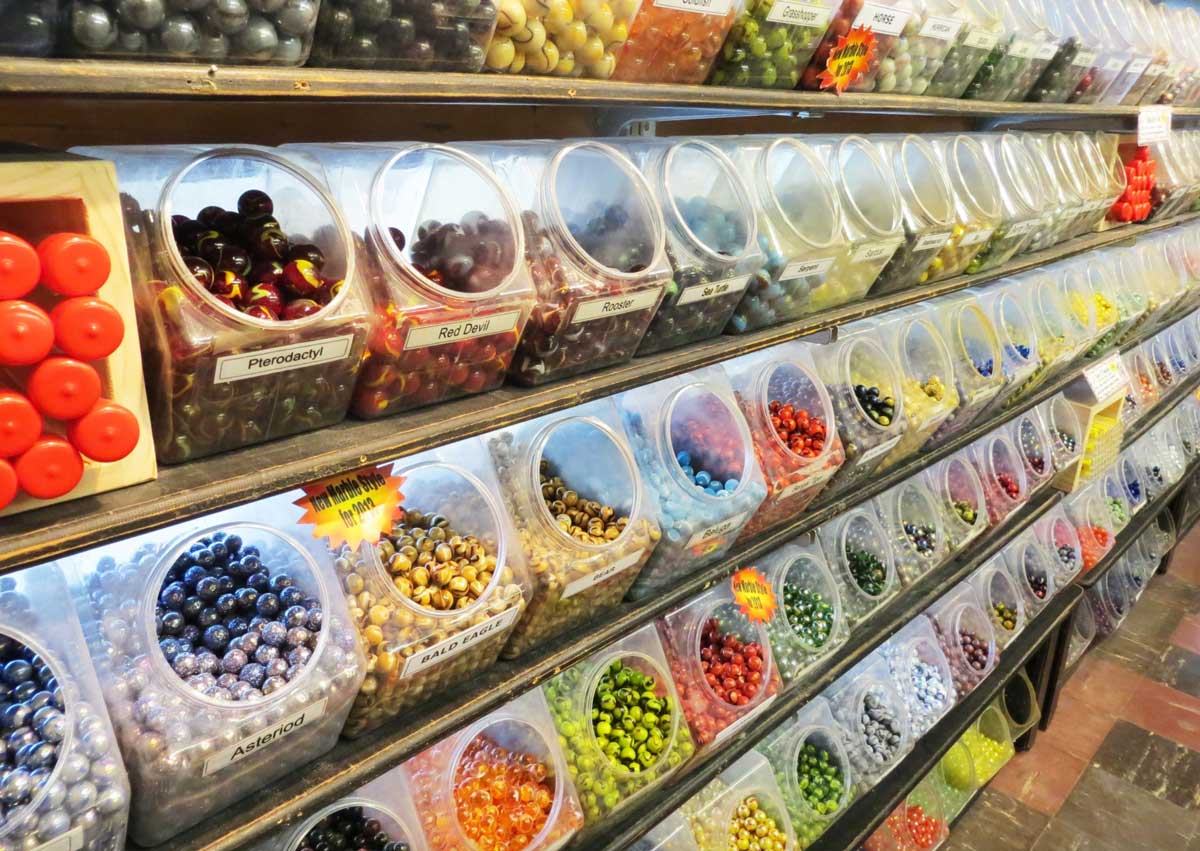
A selection of loose marbles at Moon Marbe Co. (Image courtesy of Facebook)
The Cat’s (Eye) meow
One of the most popular types of marbles, the Cat’s Eye, were first made in Japan in the years immediately following World War II and soared in popularity throughout the 1950s and ‘60s (In the 1970s, during the arts and crafts movement, handmade marbles became popular once more). Cat’s Eyes are marbles that contain eye-shaped colored cores that have been injected into the inside of the marble.
“Cat’s Eyes have been so much a predominant marble in more recent decades that many people not versed in marble jargon refer to most any marble generically as a Cat’s Eye,” David Chamber-lain of West Virginia’s American Museum of Glass writes in a post on the museum’s blog. “I’ve heard this over and over again, hundreds of times out there in non-marble venues shops, antique and collectible shows, and flea markets. I like to refer to it as being in the marble trenches! And 80 percent of those people when mentioning Cat’s Eyes do so with great affection.”
Though many glass marble companies hit the market beginning in the early 1900s, only one exists today in the U.S. – Marble King, based in West Virginia.
A well-loved pastime
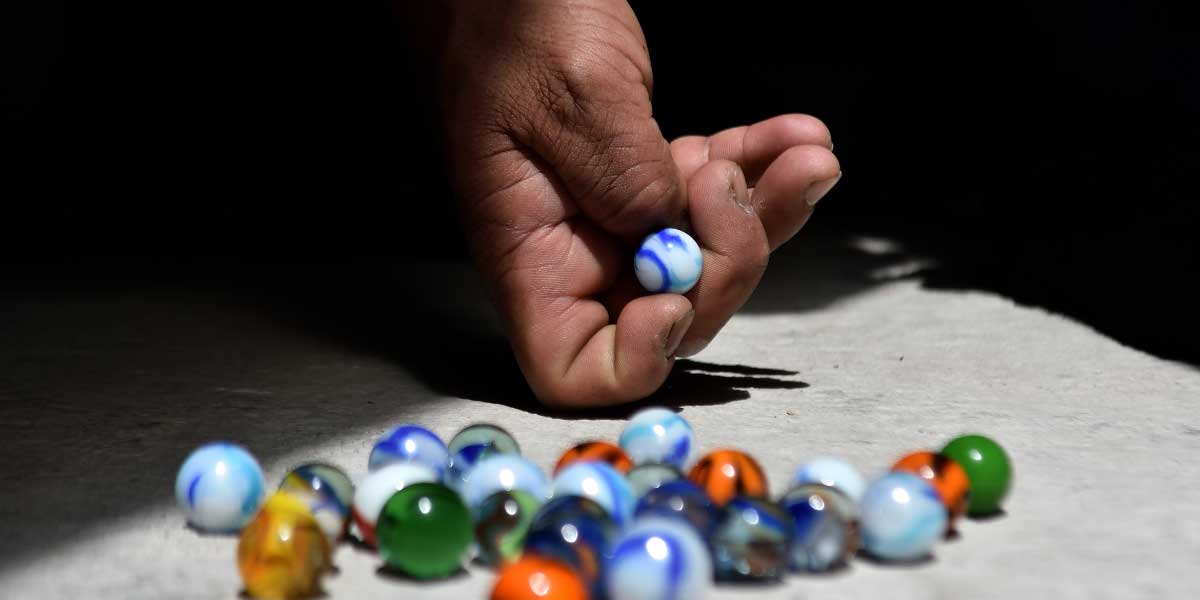
Though marble collecting remains a well-loved pastime, retired Geography professor Malcom Comeaux says the last time he saw kids play marbles was in the early 1960s. He marvels that “something with such a deep historical footprint should experience such a quick demise.” (Image courtesy of Facebook)
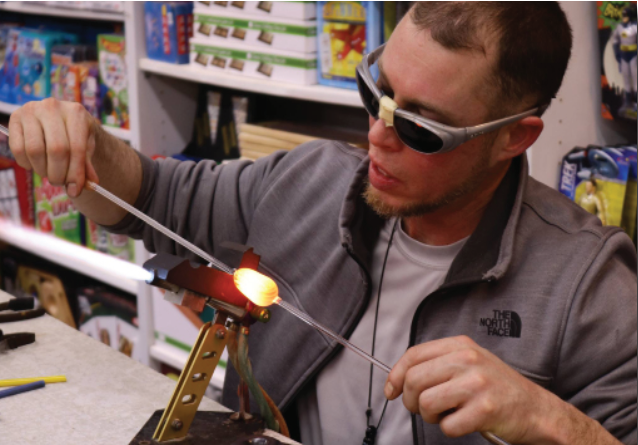
Marble-making demonstration
An employee of Moon Marble Co. leads a marble-making demonstration. Demonstrations take place at the store every Tuesday, Friday, and Saturday.
(Image courtesy of Moon Marble Co.)
“An absolute step back into childhood”
Closer to home, those living in the Kansas City metro area are familiar with the Moon Marble Co. in Bonner Springs, KS. The shop, which sells handmade marbles, bulk marbles, game marbles, art glass marbles, and a collection of other games, celebrates its 30th anniversary next year.
Moon Marble Co.’s owner, artisan Bruce Breslow, does regular demonstrations of marble making, taking the time to explain the process of glass working and marble history throughout his presentations.
“An absolute step back into childhood. A great reminder to stop and enjoy the little things. Pure nostalgia around every corner,” one commenter wrote in a review on the company’s Facebook page.
If you played marbles throughout your own childhood, you’ll recognize the terminology used during a game of marbles, everything from “knuckle down” (starting play with your knuckle against the ground) to “taw” (a larger marble with which to shoot smaller marbles, referred to as “ducks”) to “keepsies” (the player gets to keep all of the marbles he or she wins). Types of marbles, meanwhile, include the Onionskin (antique marbles with swirls and closely packed surface streaks), Turtle (a marble with wavy streaks containing green and yellow), and Clambroth (a marble with equally spaced opaque lines on a milk-white opaque base; rare versions may have blue or black base glass)
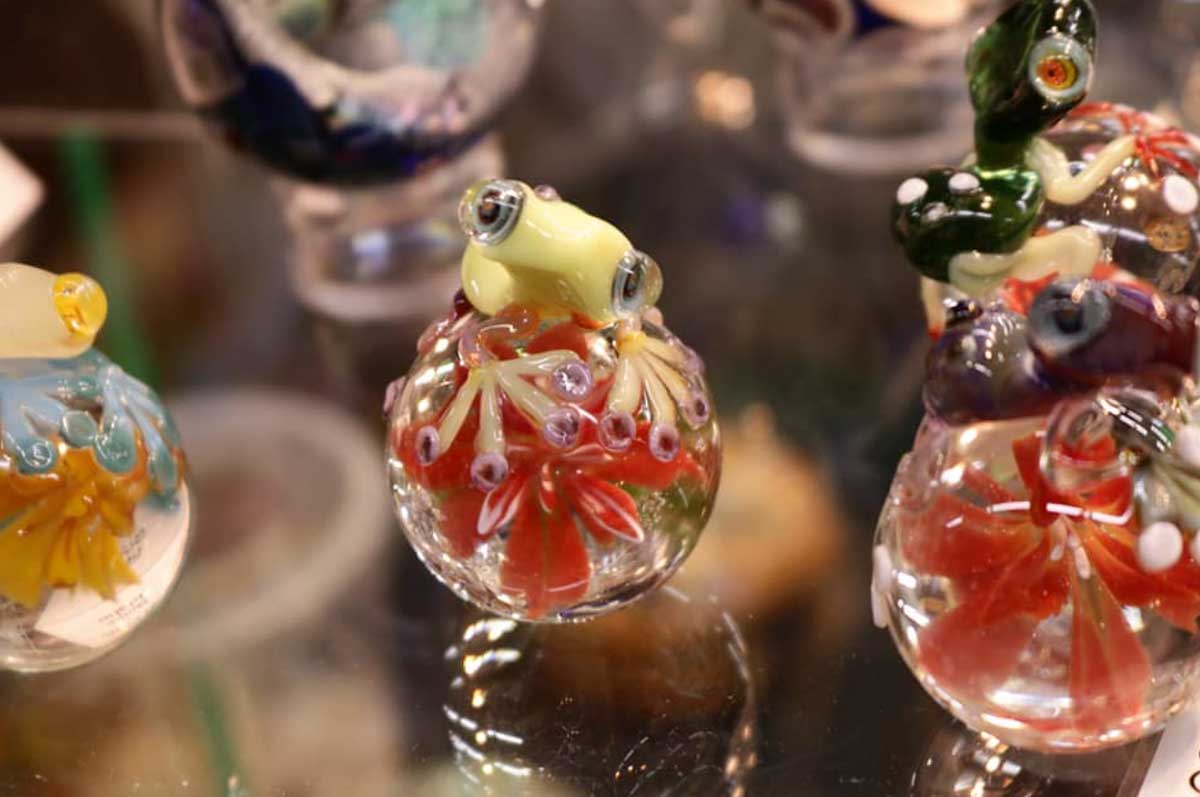
Marbles aren’t just toys
Marbles aren’t just toys – in many cases, they make fabulous decorations.
(Image courtesy of Facebook)
Discerning the old from the new
Like most all other vintage toys, marbles have a loyal following of collectors (In cyberspace, one of the largest marble collectors groups boasts 27,000 members, while another, Marble Show Mania, features listings for marble shows across the world. One of the most recent took place late last month in Decatur, IL.
These collectors, of course, take into consideration a multitude of factors when adding to their collection. Type, size, and condition are the most highly considered factors when appraising a marble. Surface damage such as chipped areas significantly lower the piece’s value. Websites such as marblebuyer.com appraises marbles and offers advice on identifying modern versus vintage pieces as well.
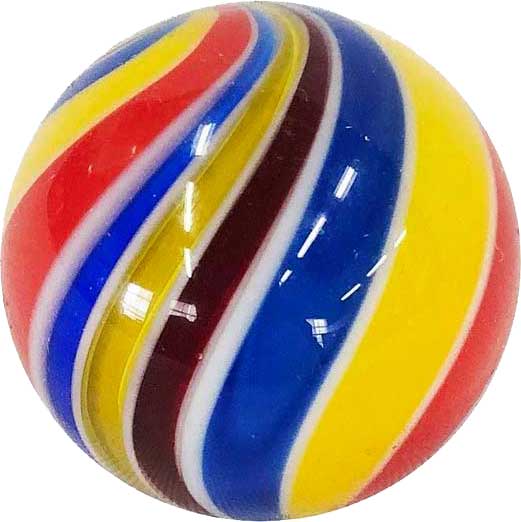
Eye-catching marbles
Although marbles are made with an array of colors, sometimes the simplest ones are just as eye-catching. (Image courtesy of marblebuyer.com)
Early machine-made marbles include faint seams where the molten glass joined together. Other identifiers of older machine-mades are color layering (color blends made by feeding separate glass streams into the mach-ines), surface quality (early machine-made marbles are smooth and glossy), and pattern signatures (swirls and twists may help identify the company or maker).
Common modern or toy marbles are made of uniform glass without layers, the colors are bright and even, they are smooth and perfect and will lack the bubbles you would find in handmade pieces. Handmade marbles, meanwhile, have pontil marks (small rough spots made when the the marble was formed at the end of a glass rod and detached while molten), contain subtle imperfections, and contain tiny air bubbles, faint ripples, or layered glass.
For more information about the history of marbles or the process for making handmade marbles, call the Moon Marble Co. at 913-441-1432 or visit www.moonmarble.com.
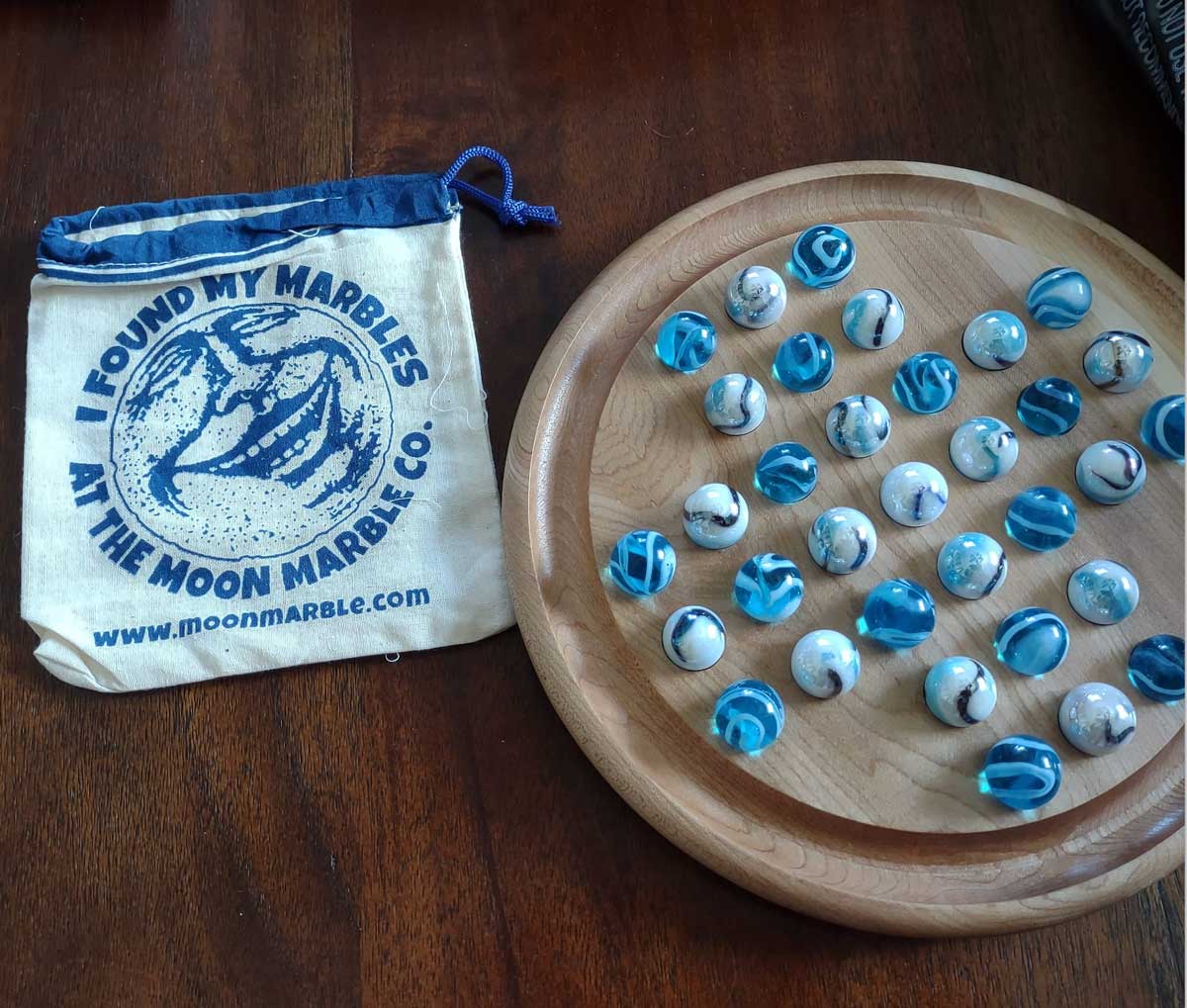
If you lose your marbles
If you lose your marbles, you’ll find plenty of options for replacements at Moon Marble Co. in Bonner Springs, KS. (Image courtesy of Facebook)
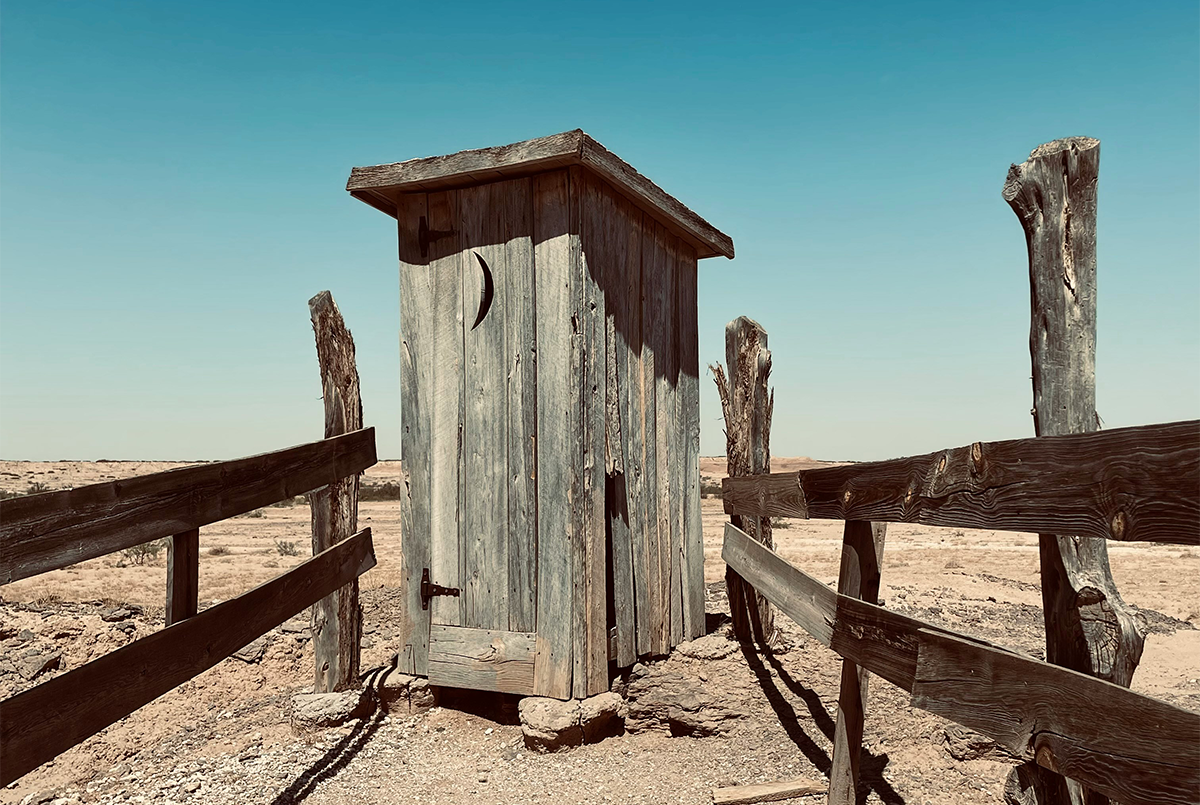
Privacy, please Outhouses were a part of daily lives in centuries past
Outhouses usually were located 50 to 100 yards from the back of one’s home. (Image courtesy of Daniel Coronoa / Unsplash.com) June 2024 Cover Story Privacy, please Outhouses were a part of daily lives in centuries past by Corbin Crable We all take indoor plumbing for…
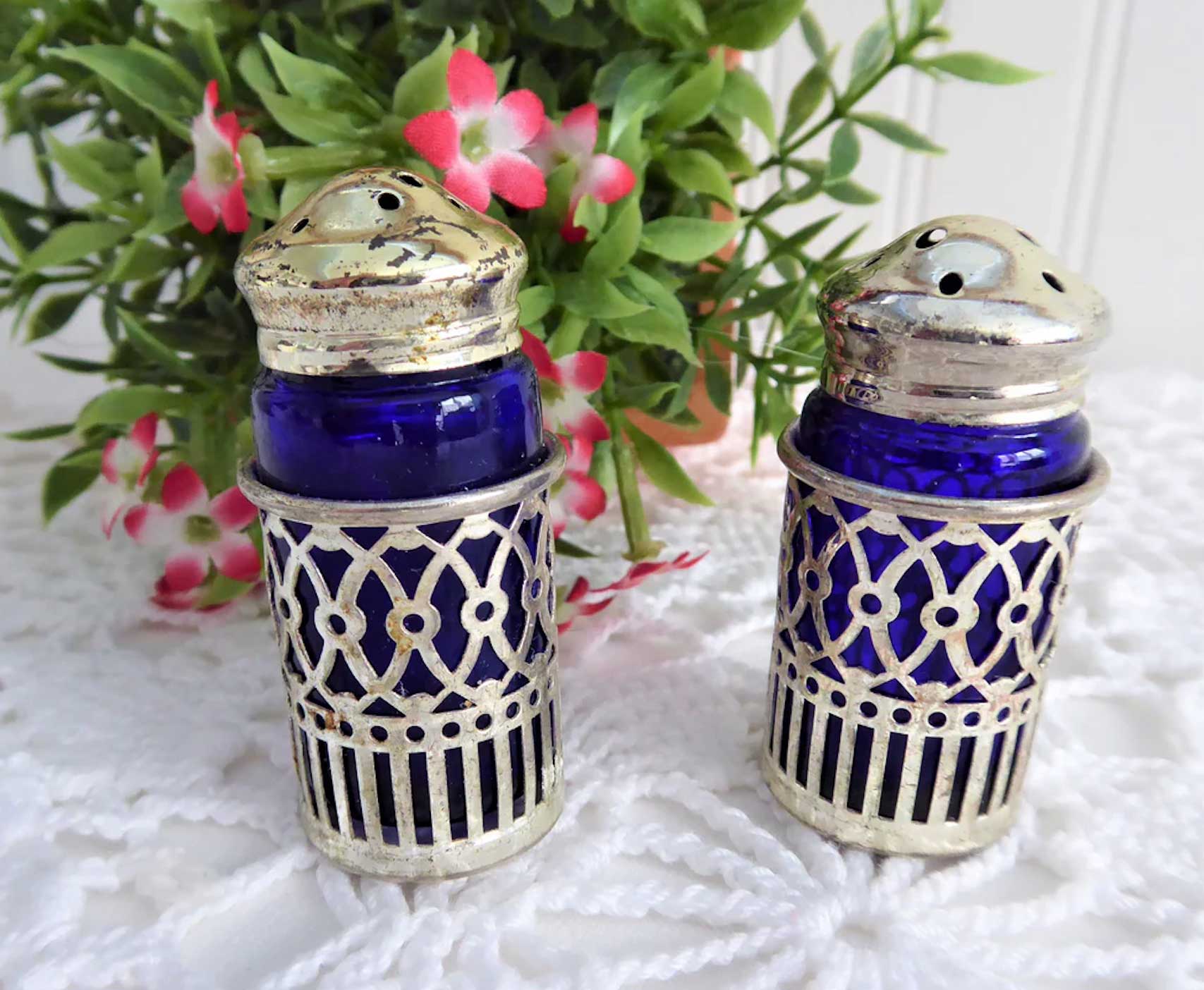
Two of a kind Salt and pepper shakers make inexpensive, colorful collectibles
These shakers have their original cobalt blue glass liners with silverplated frames and lids. (Image courtesy of Antiques and Teacups) May 2024 Cover Story Two of a kind Salt and pepper shakers make inexpensive, colorful collectibles by Corbin Crable It’s one of the…

What a doll! Barbie continues to inspire after all these years
Barbie, seen here in her original design, made her debut at the North American International Toy Show in 1959. (Image courtesy of Flatiron Nomad) Apr 2024 Cover Story What a doll! Barbie continues to inspire after all these years by Corbin Crable Ruth Handler had seen…

Landing Among the Stars NASA collectibles enjoy resurgence in popularity
The NASA logo, also referred to as “the meatball,” was designed by a NASA employee in 1959, the year after the organization was founded. Mar 2024 Cover Story Landing Among the Stars NASA collectibles enjoy resurgence in popularity by Corbin Crable Americans will be…
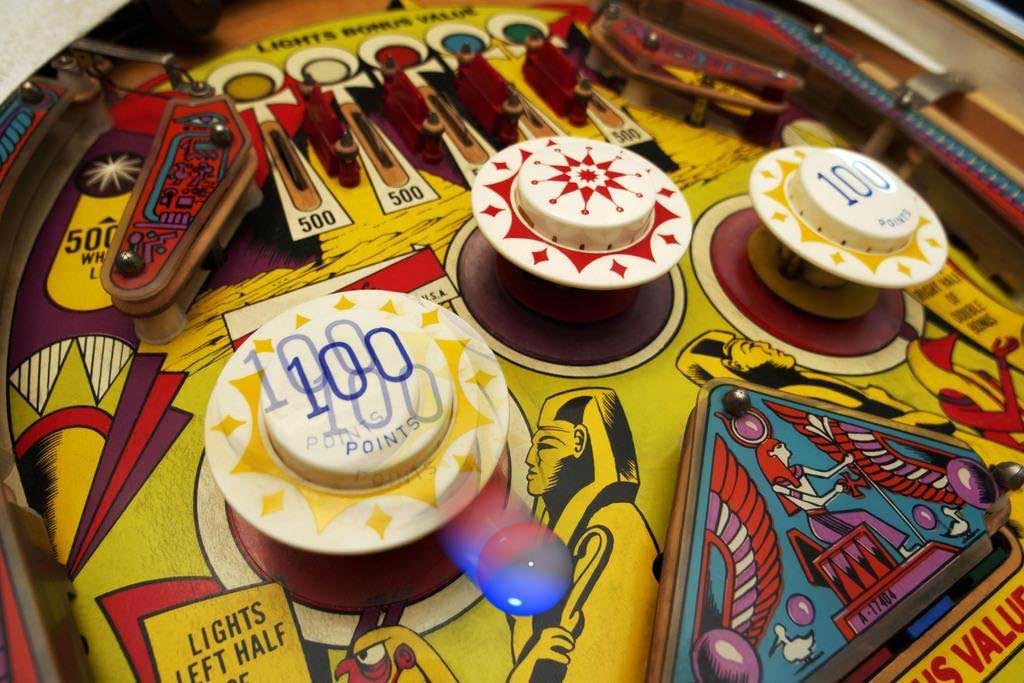
Pinball Wizard Pinball machines stay in the game even 100 years after initial release
Detail of a vintage pinball machine. (Image courtesy of Design Market) Jan/Feb 2024 Cover Story Pinball Wizard Pinball machines stay in the game even 100 years after initial release by Corbin Crable Clack! go the flippers as the ball is launched. Pop! go the bumpers…
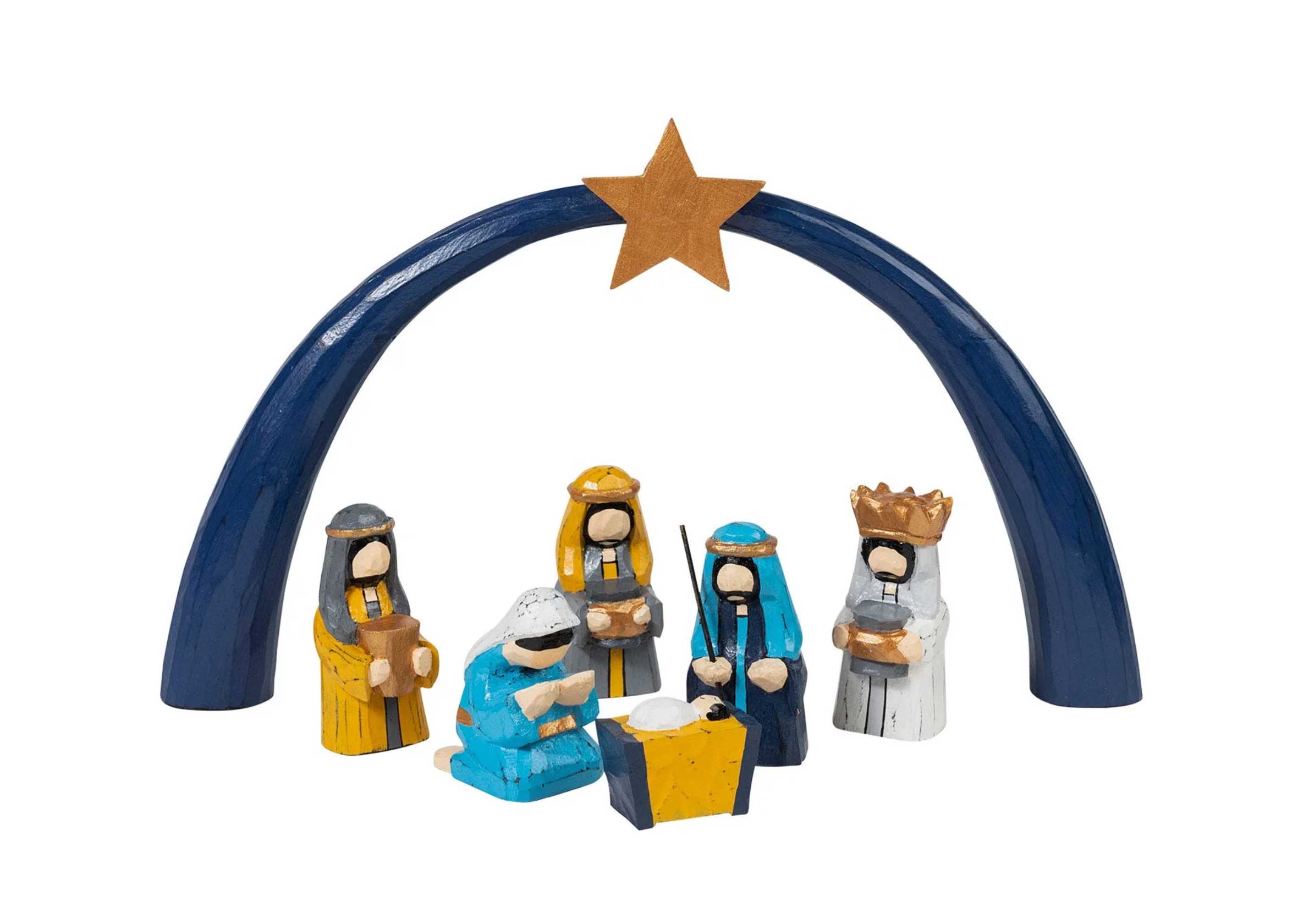
The Reason for the Season Nativity scenes from around the world depict birth of Christ
The Night Arch Nativity is beautifully hand-carved and painted by artisans in Indonesia. (image courtesy of TenThousandVillages.com) December 2023 Cover Story The Reason for the Season Nativity scenes from around the world depict birth of Christ by Corbin Crable For…

Posters’ Persuasive Power U.S. propaganda during WW II attempted to rally Americans around war effort
J. Howard Miller’s “We can do it!” poster was designed to boost morale among American women who went to work in factories and in shipyards during the labor shortage created by World War II. (Image courtesy of 1st Dibs) November 2023 Cover Story Posters’ Persuasive…

Honoring the dead Dia de los Muertos has colorful traditions, history in both Mexico, U.S.
A row of colorful skulls sits surrounded by marigolds and other flowers. Both have been longstanding parts of the imagery and altar decoration during the Day of the Dead, or Dia de los Muertos celebrated every Nov. 1-2. (Image courtesy of Getty) October 2023 Cover…
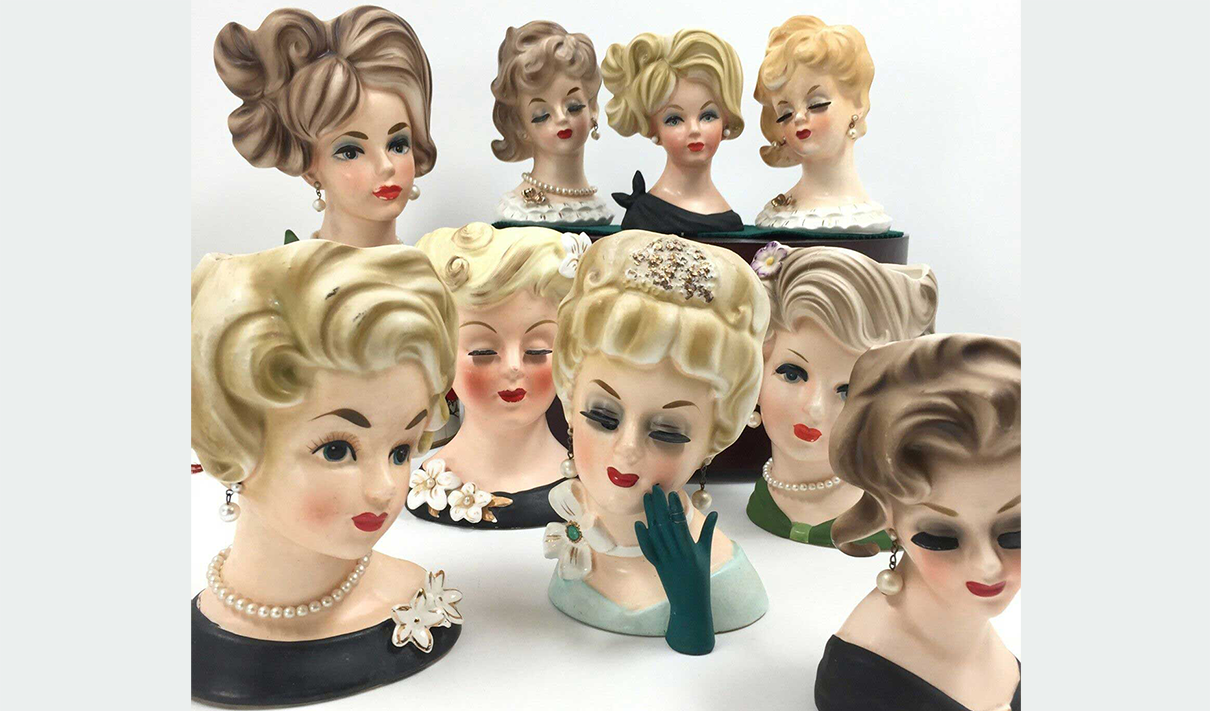
A Head Above The Rest, Lady head vases brought touch of class to one’s home
Lady head vases can be found for sale online, with prices for more common pieces ranging from $10 to $100. (Image courtesy of eBay) September 2023 Cover Story A Head Above The Rest Lady head vases brought a touch of class to one’s home by Corbin Crable They added a…
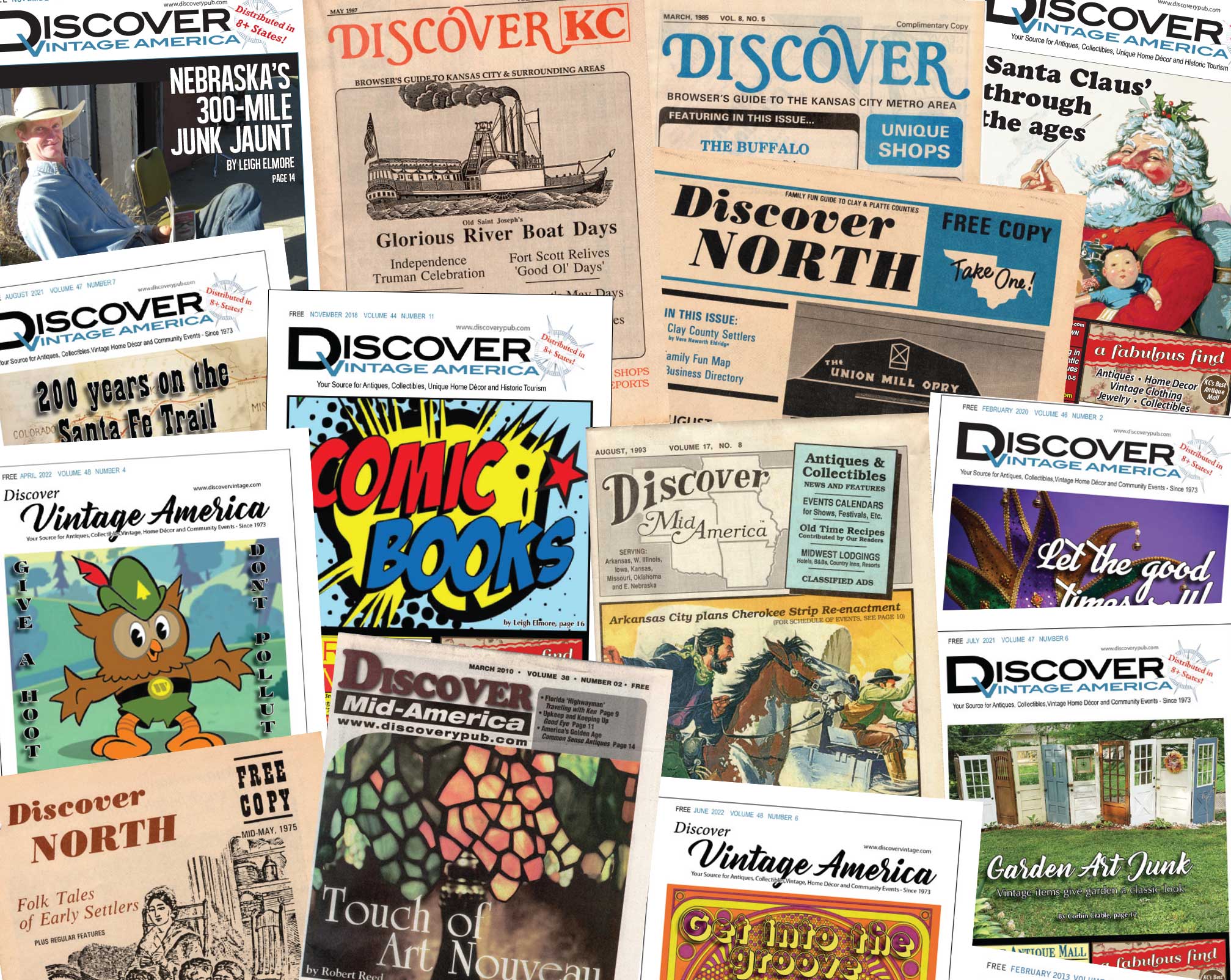
Fifty years of ‘Discovering’ began with a modest ‘guide’
Discovering front page images collage by Patti Klinge August 2023 Cover Story Fifty years of ‘Discovering’ began with a modest ‘guide’ by Ken Weyand After spending a decade as a copywriter (and later copy chief) in the advertising art department of The Kansas City…