Supplies remind us of back-to-school days – Part I

Supplies remind us of back-to-school days – Part I
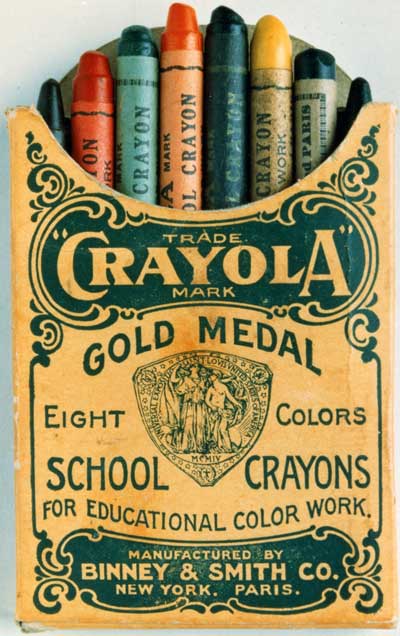
A box of Binney & Smith crayons. (Images courtesy of the author)

September 2021

Michelle Knows Antiques

Supplies remind us of back-to-school days - Part I

by Michelle Staley

In the majority of states, the kids are back in school. This year feels like it has passed in warp speed.

My “kids” are adults now but I began thinking about some of the supplies I used in school and even those that go back decades and how desirable they are today. The same applies to vintage office items. Several years ago I purchased a portable manual typewriter with the full intention of giving it to my grandchild until I began researching it and found out what I could sell it for. I currently have another one that is for sale.

I always enjoyed shopping for school supplies even when I was shopping for supplies for my daughters. Before technology became the norm in schools my daughters and I could spend more than an hour at the office supply store browsing all of the ink pens, markers, cool spiral notebooks, binders, and tape. Yes, tape. Have you recently looked at the variety of colors of adhesive and duct tape? I can still spend an hour at the office supply store looking for unique items. I primarily write with an ink pen, the style that takes a cartridge and I adore my quill “pen” which requires a bottle of ink to dip the pen tip in.

In the 1800s children wrote on slates with chalk. The slates typically measure 4x6 and may have a wood frame around the exterior. It can be difficult to determine the age as they are still being made and people will “age” the frame on a new slate. If you happen upon an old one, it will sell in the $10 to $15 range.

An early 1900s box of crayons made by Binney & Smith containing only eight crayons will sell for $300 to $400 depending upon condition and wear to the crayons. Beware, the boxes are being reproduced so you need to look at the wrapper around each crayon for age appropriate signs of wear. Another crayon name to keep an eye out for is “Rubens.” This brand is getting very hard to find and I could not find any that had been sold publicly in the past 12 years to even come up with a resell price.


Most of us learned to write with a pencil, ye olde #2. Nicolas-Jacques Conté is considered to be the grandfather of the pencil. During the French Revolution there was a shortage of graphite, Conté was tasked with coming up with a substitute. He eventually created a rectangular shaped writing tool by roasting a mixture of water, clay, and graphite in a kiln. He then shaped the mixture dependent on where they would be used, for example carpenters needed a pencil that would not roll. His innovation became known as Crayons Conté. The style is still being made and the composition has not deviated much from the original recipe. Finding an original square Crayons Conté would not be an easy task. If you happen to come across one in an old desk it would need to be carbon dated and if proven to date from Conté’s time I suspect that interest in it would be great and the auction price would top six digits.

The inventors of the #2 pencil were the author Henry David Thoreau and his dad. In the 1820s they erected a pencil factory in New Hampshire. It was in this factory that they created a graphite pencil that was less brittle and did not smear when used on parchment. They laid new groundwork by offering several pencils from #1 being the softest to #4 which is the hardest. Despite all of the technology available to us today the #2 pencil is the gold standard in classrooms all over the country.

Stay tuned for part II of this column next month, in which we will explore more antique school supplies.
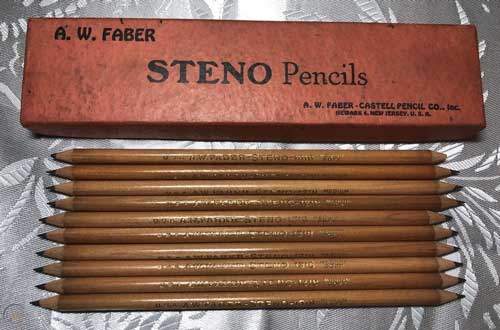
Faber steno pencils.

Michelle Staley is a Lenexa, KS-based dealer and researcher with 35 years of experience in the antique trade. Send questions with photos to Michelle to michelle@discoverypub.com. Please keep queries to one question; questions without photos of the item may not be answered. Michelle is also available for consulting and extensive research work beyond this column. If you would like an appraisal on an antique or collectible please go to www.michellesantiqueappraisals.com for a one-on-one appraisal.

* PLEASE NOTE NEW WEB ADDRESS
SEPTEMBER 2021 – The Life of an Outlaw – Site tells story, dispels myths surrounding Jesse James

SEPTEMBER 2021 – The Life of an Outlaw – Site tells story, dispels myths surrounding Jesse James

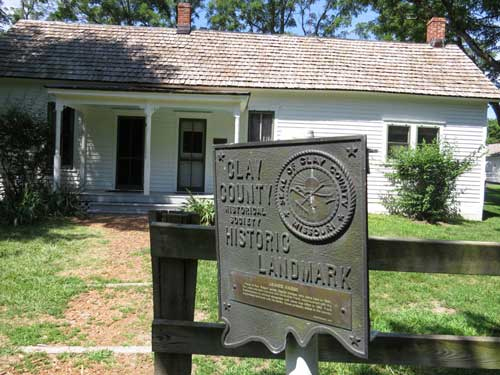
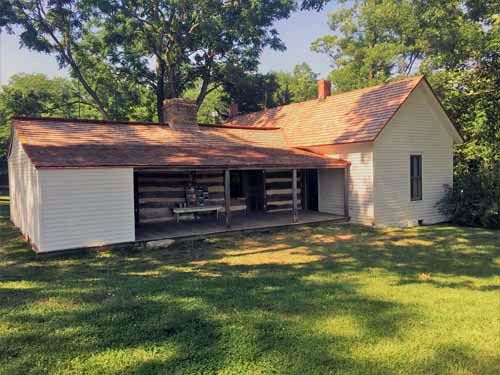
Built in the late 1820s, the three-room log cabin where American outlaw Jesse James was born was owned by the family from 1845 until the late 1970s, when it was sold to Clay County, MO. (photo courtesy of Elizabeth Gilliam Beckett)

Historic Site in Missouri

 One historic site in Missouri stands as a testament to the lawlessness of the American frontier of the 19th century, with thousands of visitors from all over the world visiting it each year to learn about the life of the great outlaw Jesse James.

According to Elizabeth Gilliam Beckett, historic sites manager for Clay County, MO, which includes the Jesse James Farm and Museum in Kearney, an estimated 10,000 to 12,000 make the trip to the site every year. There, she says, they learn to separate the myth of Jesse James from the facts about his infamous deeds.

 “The biggest misconception about Jesse James is that he was a ‘Robin Hood,’” Beckett says of the legendary character who stole from the rich and gave to the poor.


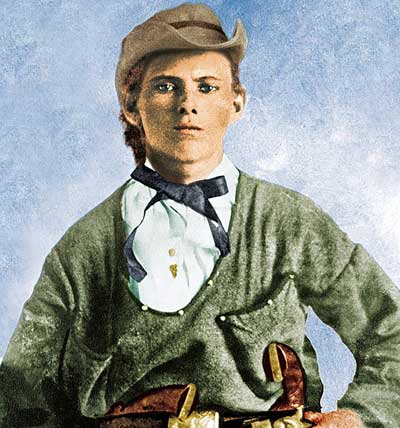
The young Jesse James, shown here in a colorized photo at age 14, adopted his family’s staunch pro-Confederate and pro-slavery views. (image courtesy of PBS.org)

The young Jesse James, shown here in a colorized photo at age 14, adopted his family’s staunch pro-Confederate and pro-slavery views. (image courtesy of PBS.org)

Forged by hate and bloodshed

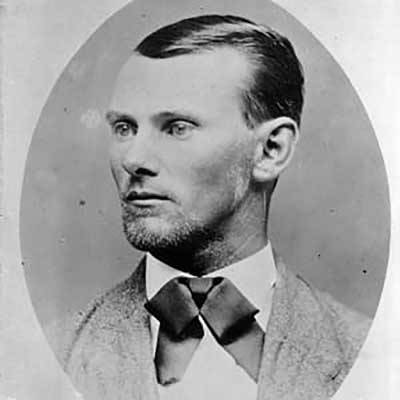
The real Jesse James was much more complicated and much less worthy of adoration. Born Jesse Woodson James on Sept. 5, 1847, near Kearney, he grew up in the “Little Dixie” area of Missouri, a wide swath of 13 counties heavily populated by Southerners who emigrated there, bringing their cultural and political practices – including slavery. Little Dixie includes the region between the Mississippi River north of St. Louis to Missouri counties in the central part of the state.

As the Civil War brewed, the teenaged James grew up in a household with decidedly pro-Confederate views. He and his brother, Frank, even joined pro-Confederate guerillas, pledging their allegiance to William Quantrill and “Bloody Bill” Anderson, two guerilla leaders who traversed Missouri and Kansas in a violent hunt for escaped slaves. The James brothers, especially Jesse, terrorized the guerillas’ enemies.

“He helped to tear apart his community without reflection or self-doubt,” historian T.J. Stiles wrote in his biography, “Jesse James: Last Rebel of the Civil War,” published in 2002. “Seized by his hatred and ideological convictions, he could not see himself for what he was. Instead, he reveled in the powers his murders earned him.”

After the nation’s bloodiest war had come to an end, having already acquired a taste for looting during the 1864 Centralia Massacre, in which Confederate forces captured and executed two dozen Union soldiers in Centralia, MO, Jesse and Frank James joined the ranks of other former Confederate guerillas in living the lives of outlaws. The men robbed trains, banks, and stagecoaches throughout the Midwest, becoming household names nearly overnight, amassing other disillusioned men to join their gang for the decade following the war.

‘A common thug’

Still, Stiles writes, the media of James’ day – and James himself -- portrayed him as a modern-day Robin Hood, despite the fact that no evidence existed of James sharing the money he stole with those less fortunate.

“Jesse James was not an inarticulate avenger for the poor,” Styles writes in his biography of James. “His popularity was driven by politics – politics based on wartime allegiances – and was rooted among former Confederates. … He promoted himself as a Robin Hood; his enemies derided him as a common thug.”

Jesse James was finally done in by a member of his own gang – Robert Ford, a new recruit whose act of murder was fueled by the promise of a bounty on James and by the promise of amnesty for the crimes he had committed. Ford shot James in the back of the head on April 3, 1882. Though he wasn’t paid the entire $10,000 bounty, Ford was granted a full pardon by Missouri’s governor and lived out the rest of his days posing for photos in dime museums as “the man who killed Jesse James.” He also re-enacted James’ murder in a touring stage show. Ford took his own life on May 4, 1884.

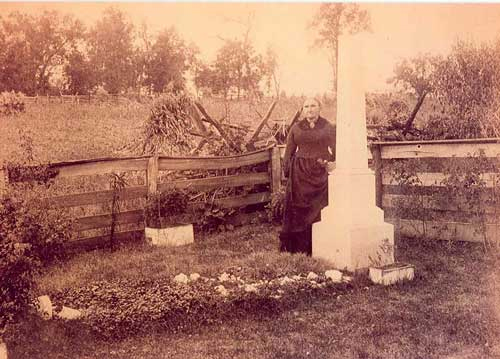
Zerelda James, Jesse’s mother, stands at his gravesite in 1882. During an 1875 raid on her house by the Pinkertons, who were looking for Jesse, authorities tossed an explosive device into the house that detonated and mangled Zerelda’s arm so badly that it had to be amputated below the elbow. After Jesse’s death, Zerelda gave tours of the cabin in which Jesse was born, and for just 25 cents, visitors could take home a souvenir pebble from Jesse’s headstone. (Image courtesy of PBS.org)

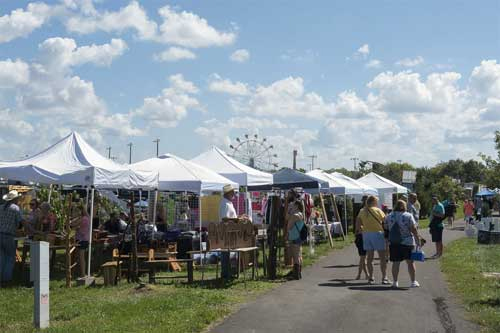
Kearney’s Jesse James Festival has taken place every September for 50 years. (photo courtesy of KCParent.com)

In Kearney and nearby St. Joseph, MO, where the house in which James was killed still stands as another historic site of interest, signs of Jesse James’ influence are everywhere – the Jesse James Antique Mall and Furniture Gallery, right off Interstate 29 in St. Joseph, has drawn bargain hunters for decades. And in Kearney, the annual Jesse James Festival – a family-friendly event – has brought crowds to town for 50 years.

“The reality is that Kearney hosts a festival that brings a large collection of people from all walks of life together,” according to the festival’s website. “They gather, not to pay tribute to an outlaw, but to be reminded of an historical era which had a great impact on our country.”

Passing on into infamy

Jesse James, of course, lived on in the decades afterward, not only in word-of-mouth stories of his robberies and other infamous deeds, but in numerous media forms, including music, literature, and Western films.

“In the end, (James) emerges as neither epic hero nor petty bully, but something far more complex,” historian T.J. Stiles writes. “In the life of Jesse James, we see a place where politics meets the gun.”

Obviously, Clay County’s Beckett notes, the festival helps offer a boost in the number of visitors each year.

“The Jesse James Festival is hosted by the city of Kearney, and the museum benefits from many visitors during that weekend,” she says.

The 2021 Jesse James Festival will take place Sept. 10-11 and Sept. 16-19 at Jesse James Park in Kearney.

Life on the family farm

Still, the museum is a must-visit site when it comes to learning not just about Jesse James the man and legend, but also the tumultuous times in which he lived. The members of the James family were not the first to live on the farm – that distinction, according to historian Phil Stewart, goes to a pair of twin brothers, Jacob and David Groomer, who purchased a tract of land near Kearney in 1822 and built a farm upon it. The brothers built a three-room log cabin on the farm, too, and various members of the Groomer family lived in it for the next 20 years.

A young Baptist preacher, Robert James, and his wife moved to town and bought “the old Groomer place” in October 1845 for $1,640. Most of his children, Jesse included, were born in the log cabin.

Stewart continues, “It was here that Jesse James swore vengeance against the Union, and it was here that he carried on his personal war against society. Robberies were planned here. Posses and detectives lurked in the trees north of the house. And it was here that history was made. The old house has seen more than its share of tragedy and sorrow.”

The government of Clay County, MO, has owned and operated the James farm since 1978. Photo courtesy of TheWalkingTourists.com

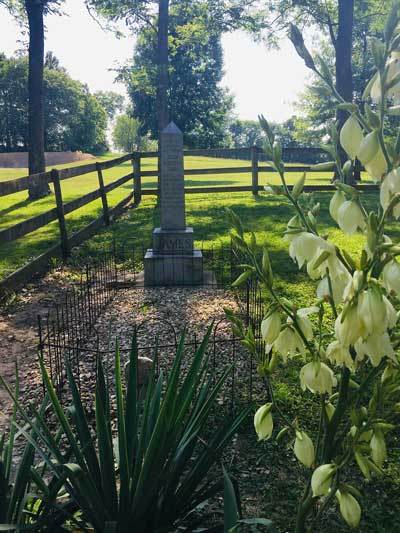
“No place on God’s green earth has closer ties to Jesse James than does the James Farm and the house that is still its centerpiece,” Stewart wrote in an historical article about the farm. “He was born here, and it remained a safe haven and place of comfort throughout his life. His body would be brought here after his death in 1882, and it was here that he was laid to rest in the corner of the yard where he had played as a boy.”

Jesse James’ body was originally buried on the family farm but later moved to the Mount Olivet Cemetery in Kearney. The original footstone remains on the farm. (photo courtesy of Elizabeth Gilliam Beckett)

Ownership of the farm changed hands between descendants of Jesse James for the next century, until 1978, when the Clay County government bought it from the James grandchildren and immediately began restoration work. The farm opened to the public the following year, when its board of directors founded the “Friends of the James Farm,” an organization of supporters designed to fund the continued maintenance and upkeep of the site through regular donations.

“The old place looks pretty much as it did more than 100 years ago,” historian Phil Stewart says of the property. “…The visitor can easily lose themselves in the history of the time and place.”

For her part, Beckett says the historic site doesn’t exist to glorify Jesse James, but to educate visitors about his life and the era that shaped his world view.

“The museum tells the story of a time period in history,” she says, “and the visitor can decide how they see him.”

Event marks Santa Fe Trail’s 200th anniversary

Event marks Santa Fe Trail’s 200th anniversary

September 2021

Event marks Santa Fe Trail’s 200th anniversary

The small town of Council Grove is getting ready for a big party to celebrate the Santa Fe Trail’s 200th anniversary as a major route for trade in the 19th century.

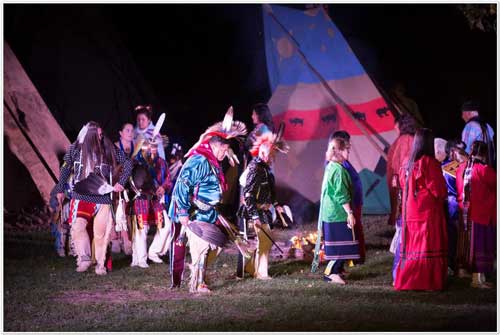
The Rendezvous at Council Grove, scheduled for Sept. 17-19, will feature a host of activities designed to highlight life and historical events that would shape the history of the trial since 1821. A pageant sponsored by local group Voices of the Wind, made up of Konza Indians from the Kaw Nation, will “depict the changes affected by two vastly different cultures.

As the Kaw Indians were being relocated and European American settlers were beginning to populate Council Grove on the Santa Fe Trail, the dynamics of these two cultures co-existing proved to be intense,” according to the group’s website. The rendezvous also will include a mountain man exposition, an antique wagon show, and blacksmithing demonstrations.

The Voices of the Wind performances take place in the old Neosho riverbed near historic downtown Council Grove and adjacent to the Santa Fe Trail crossing on the Neosho River. The production incorporates historic photos, images of the prairie landscape, and video images with the live-action of a pack train, wagon train, stagecoach, riders on horseback, tepees and the campfire of a Kanza village, according to event co-organizer Diane Griz.

For more information, visit www.santafetrail200.com/rendezvous-at-council-grove.


Konza Indians from the Kaw Nation perform their Voices of the Wind pageant at a previous event. The performance will be a highlight of this year’s Council Grove Rendezvous. (Image courtesy of Facebook)